• Skip to primary navigation
  • Skip to main content
  • Skip to footer
Arizona Sunrise Shih Tzu & Poos Logo

Arizona Sunrise Shih Tzus & Poos

Purebred Shih Tzu Puppies

  • Home
  • Program & Pricing
  • About
    • My Journey
    • Dams
    • Sires
    • Transportation
    • Contract
  • Nursery
  • Reserve
  • Blog
  • FAQs
  • Contact
  • More
    • Liver Shih Tzu Puppies
    • Shih Tzu Breed Information
    • Recommendations

Education

The Array of Shih Tzu Coat Colors & Patterns

January 29, 2023 By Deanna

Liver-chocolate and gold-liver Shih Tzu puppies wearing Christmas harnesses.
Chocolate-liver & gold-Liver Shih Tzu Puppies

Shih Tzu Coat Color 101

Shih Tzu coat colors and patterns are often a hot topic. When it comes to a Shih Tzu puppy’s color and markings the outcomes are vast. Shih Tzu puppies can come in a variety of colors and patterns.

The American Kennel Club recognizes 19 different coat colors in Shih Tzus:

Coat colors that the AKC currently recognizes include:
  • Gold & White
  • Liver
  • Liver & White
  • Red
  • Red & White
  • Silver
  • Silver & White
  • Silver, Gold & White
  • White
  • Black, Gold & Silver
  • Black, Gold & White
Common Coat Colors & Patterns

Some Shih Tzu breeders breed for certain colors to produce a chocolate Shih Tzu puppy or even a pure black Shih Tzu puppy for example. When breeders refer to a puppy as chocolate they are describing the coat color. The pigmentation color of a chocolate Shih Tzu is liver. Other Shih Tzu breeders prefer to produce puppies in a variety of coat colors and patterns.

Also, a Shih Tzu puppy may be solid and all in one color. For example, a Shih Tzu puppy may be born all gold with no other color present. Or, a Shih Tzu puppy may have abstract coat coloring. For instance, a chocolate Shih Tzu with a white patch on the chest is known to have an abstract coat pattern.

We must not forget the beautiful Parti Shih Tzu. A Parti puppy’s fur color usually consists of two or three colors. Usually white is the base color of a Parti Shih Tzu. Some of the common color combination outcomes include a chocolate and white Shih Tzu puppy, a black and white Shih Tzu, or a gold, black and white puppy. 

Let’s start by discussing the gold Shih Tzu. A gold puppy is usually a dark gold color at birth. An all-gold Shih Tzu puppy may or may not have a black mask. It isn’t uncommon for black tipping to appear on a golden puppy’s coat. Often the tipping goes away gradually when the coat is cut.

Furthermore, a gold Shih Tzu can come in a solid, abstract, or Parti pattern as mentioned above. A gold Shih Tzu puppy’s coat color often lightens with maturity. I have had the honor to raise several abstract gold Shih Tzu puppies in my breeding program. All of their coats got considerably lighter with age. An adult gold Shih Tzu can range in color from dark gold to a light fawn color. The intensity gene is often responsible for determining the shade of gold. 

A red Shih Tzu puppy is typically born with a gorgeous dark orange color. A Shih Tzu puppy that is red is sometimes confused with a gold puppy. Red Shih Tzus tends to be a darker deep orange. Shih Tzus with a red coat is also prone to coat color changes with age. A Shih Tzu with red coloring may have a black mask or another color present throughout the coat. 

Solid black Shih Tzu puppies are rare. A Shih Tzu puppy may appear to be solid black at birth but often changes color over time. It isn’t uncommon for a Shih Tzu puppy to be all black at birth only to develop patches of another color as the coat matures. It is more likely to find a black Shih Tzu puppy with a white patch on the chest or a black and white Parti Shih Tzu puppy. That being said, solid black Shih Tzus do exist. They just aren’t as common as a black Shih Tzu with another color mixed into the coat.

I have been fortunate enough to raise several black Shih Tzu puppies in my Shih Tzu Breeding Program. Often a black Shih Tzu will have a silver or sable undercoat visible in puppyhood. Or a black Shih Tzu puppy may develop patches of white or silver on the coat over time. It is really difficult to predict a Shih Tzu puppy’s adult coat color. As the Shih Tzu puppy matures the adult coat slowly grows in and may go through many color changes.

Solid white Shih Tzu puppies are uncommon as well. An all-white Shih Tzu puppy’s coat will often have at least a splash of another color somewhere on the coat. A solid white Shih Tzu is often genetically cream or the result of the extreme piebald gene. The piebald gene causes the coat to be comprised of a white base color with patches of a secondary color seen throughout the coat. To complicate things further, a pure white Shih Tzu puppy may truly be a silver Shih Tzu. Often the silver sheen on a Shih Tzu puppy’s coat isn’t apparent until adulthood.

Silver Shih Tzus often looks white at birth. Sometimes a silver Shih Tzu puppy will have another color running through the coat such as black or white. A lot of individuals mistake the silver undercoat in a Shih Tzu for white. If you look closely in the sunlight you will see that a silver coat has more of a shimmer.

Brindle Shih Tzu puppies typically have a coat that is one color with another color flowing through the coat. The streaking can be subtle or very obvious. A brindle coat may not be noticeable in a Shih Tzu Tzu puppy until the adult coat grows all the way. The streaking of the other coat color may become more obvious when the puppy gets a haircut. Many of the Shih Tzu puppies in my breeding program that were nearly pure black at birth ended up being black brindle Shih Tzus. The silver undercoat in the puppies just took time to grow in. 

A liver Shih Tzu is a bit more tricky to explain. The American Kennel Club considers any Shih Tzu puppy with a liver nose to be liver regardless of the coat color. Liver Shih Tzu puppies may come in just about any color other than black. All black becomes brown in a liver Shih Tzu. For example, a chocolate Shih Tzu and a gold Shih Tzu are both liver if the nose, paw pads, and eye rims are liver in color. If you want to learn more about the different pigmentation that Shih Tzu puppies may be born with click here.

Blue Shih Tzu pups are born with blue pigmentation. Blue refers to the pigment once again and not the official coat color. Shih Tzu puppies that are blue often have a charcoal pigment color. A blue Shih Tzu may be solid, abstract, or a combination of two or three colors as well. If a liver Shih Tzu has the dilute gene responsible for blue pigmentation the pigment will take on an almost lavender color. This lavender color is often known as Isabella.

As you can see after reading today’s blog post, Shih Tzu coat colors and patterns are vast. Whether you’re looking for a chocolate-liver Shih Tzu puppy or a pure black Shih Tzu it is important to always remember to choose a breeder that puts health and proper socialization first! Shih Tzus can come in an assortment of beautiful colors. A Shih Tzu puppy’s coat color may change over time but your Shih Tzu’s unconditional love for you will always remain the same! 
Share This Post
Previous

What Puppy Vaccines Does Your Shih Tzu Need?

Next

The Ideal Age to Bring Your Shih Tzu Puppy Home

Filed Under: Breed Information, Education, Uncategorized Tagged With: puppy

Kong Stuffer Ideas for your Shih Tzu Puppy

January 25, 2023 By Deanna

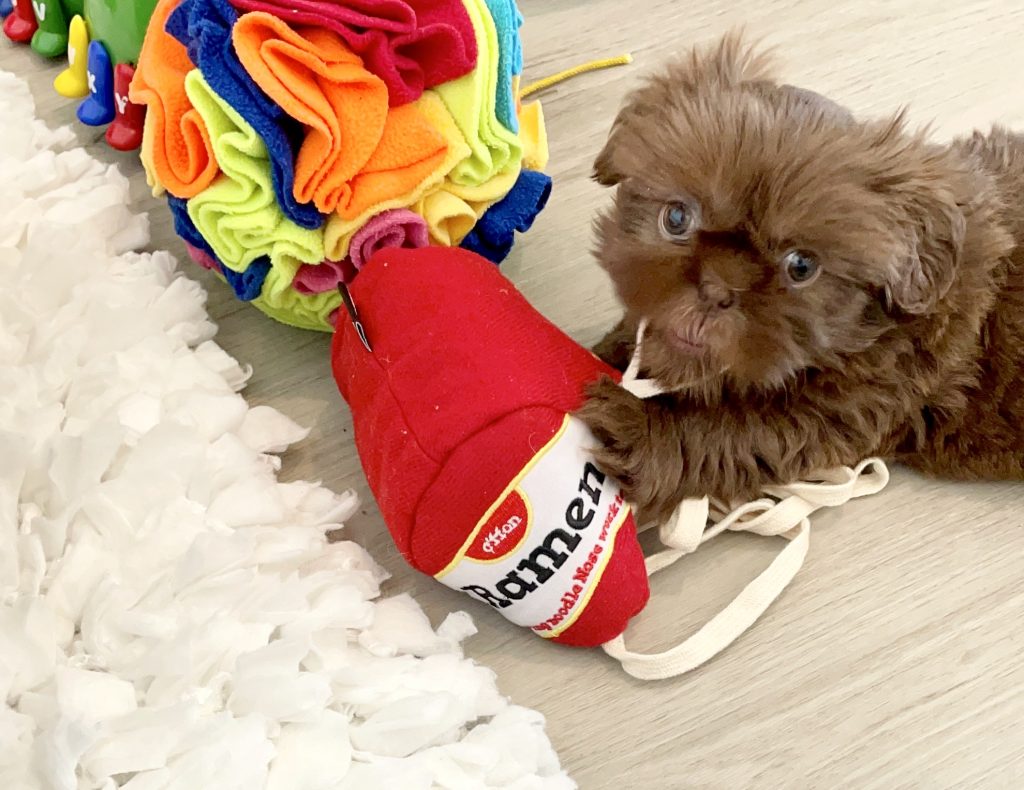
A chocolate Shih Tzu puppy keeping busy with a snuffle mat and an interactive ramen noodle toy.
Shih Tzu Puppy Playtime

Are you looking for ways to keep your puppy busy?

Stuffing a Kong is a great interactive activity for your Shih Tzu puppy. I love stuffing Kongs for the Shih Tzu puppies that I raise in my responsible breeding program. A Kong is awesome at keeping your Shih Tzu puppy busy and forcing your puppy to eat slowly. Although a Kong is a great form of mental stimulation it is important to make sure that the ingredients you’re stuffing into the Kong are safe for dogs. Fruit should be washed, peeled, and chopped into pieces.

Furthermore, all ingredients used for Kong stuffing should be free of harmful seasonings, artificial flavors, or sweeteners. Plain is best when it comes to choosing what to put into the Kong. Also, Avoid fatty items. Watch out for overindulgence as well. Too much of a good thing may backfire. 

I hope your Shih Tzu puppy benefits from the Kong stuffer suggestions below:

  • Shredded boiled chicken without skin, bones, or seasonings
  • Low-fat plain yogurt with chopped-up peeled apple chunks
  • Scrambled egg without seasonings
  • Banana and peanut butter
  • Cream cheese
  • Canned plain pumpkin
  • Plain mashed potato
  • Rice
  • Oatmeal
  • Cottage cheese
  • Kong stuffers
  • Canned wet dog food
  • Frozen applesauce
  • Berries
  • String cheese
  • Canned tuna or sardines
  • Dehydrated dog food
  • Frozen chicken or beef broth for dogs
  • Baby food that isn’t toxic for dogs
  • Sweet potato
  • Squash
  • Cantelope
  • Seedless watermelon

For more Kong Stuffer ideas check out the link below:

https://www.kongcompany.com/cuisine/

Share This Post
Previous

Xylitol Poisoning in Your Pet

Next

What Puppy Vaccines Does Your Shih Tzu Need?

Filed Under: Behavior, Health, Nutrition, Uncategorized Tagged With: dog behavior, puppy health

Xylitol Poisoning in Your Pet

January 22, 2023 By Deanna

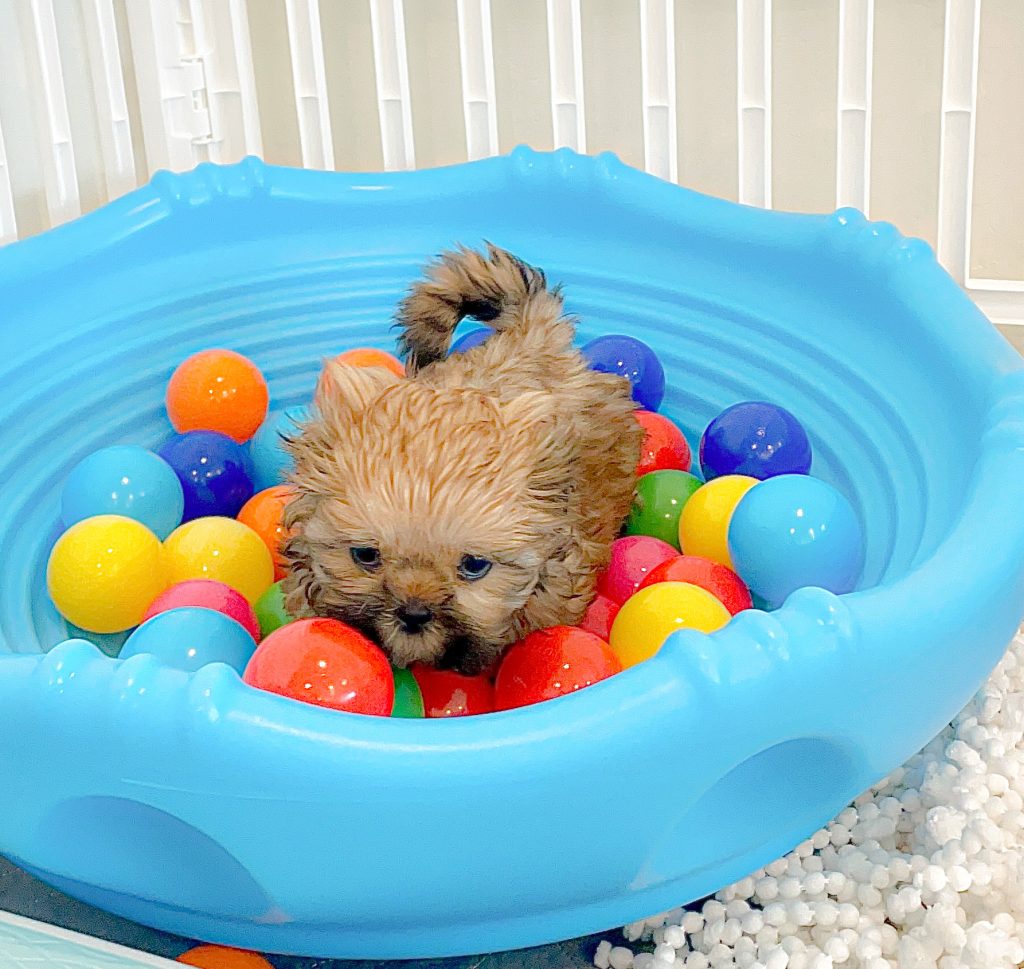
A male sable Shih Tzu puppy playing with colorful balls in a wobble disc.
Shih Tzu Puppy from my Breeding Program

Have you ever heard of Xylitol?

Furthermore, did you know that Xylitol is toxic to dogs? Xylitol is an artificial sweetener that can cause serious health issues in your dog including possible death. Xylitol is a common ingredient found in gum and baked goods. Xylitol may be tricky to locate on package ingredient labels because it often goes by different names. Xylitol is often labeled as sugar alcohol, birch sugar, or wood sugar.

Some of the most common food items that may contain xylitol include:

  • Sugar-free candy
  • Sugar-free gum
  • Sugar-free foods
  • Keto or low-carb foods
  • Vegetarian foods 
  • Toothpaste
  • Mouthwash
  • Peanut butter
  • Syrup
  • Nasal sprays
  • Chewable vitamins

It doesn’t take much xylitol to cause ill effects in a dog. Small breed dogs like Shih Tzus are at an even greater risk because of their relatively small stature. Doses over 0.5 grams may cause liver toxicity and possibly lead to death. Xylitol gum typically has up to 1 gram of xylitol per piece. That is enough to kill a small dog like a Shih Tzu! 

When my children were young we got our first dog. We tried to educate ourselves as much as possible before our puppy arrived. I even went as far as to avoid gum chewing in the home because my children were notorious for dropping things.

One day, I went to take our puppy into the puppy-proofed dog yard to play. I turned my back for a minute and turned around to see her chewing on a stick of gum. By the time I got to her, she had already chewed up part of it. I called my veterinarian and she told me to try to induce vomiting with peroxide. I wasn’t certain if the gum contained xylitol but wasn’t willing to take any chances.

Our puppy wasn’t vomiting after the peroxide. It was after hours but my veterinarian agreed to meet me at her office. Our vet ended up pumping our puppy’s stomach which fortunately removed the gum. Our puppy ended up being fine. But, if I hadn’t noticed our puppy eating the gum the outcome could have been tragic!

We never found out how the gum ended up in the yard. I suspect one of the kids or their friends accidentally dropped it from their pocket. I learned my lesson! I always from that day forward did a quick sweep of the yard before letting my dogs outside. Doing a quick daily check of the home inside and out is much less stressful than losing a family pet.

Some of the symptoms that you can look out for if you expect poisoning include:

  • Lethargy
  • Vomiting
  • Diarrhea 
  • Weakness
  • Lack of coordination
  • Seizures
  • Collapsing 

As a responsible Shih Tzu breeder, I always educate my puppy parents on how important it is to keep puppies away from toxic substances. I highly recommend not having xylitol-containing products in your home unless it is safely stored away and properly handled.

If your dog ever does ingest xylitol or any other poison contact your veterinarian for advice immediately. Time is of the essence when it comes to xylitol ingestion in your pet. It is always better to be safe than sorry. Your dog’s life may be on the line!

Share This Post
Previous

The 7 Major Dog Groups

Next

Kong Stuffer Ideas for your Shih Tzu Puppy

Filed Under: Health, Uncategorized Tagged With: Dog safety

The 7 Major Dog Groups

January 19, 2023 By Deanna

Did you know that there are 7 major dog groups?

Most dogs fall into one of the 7 major dog group categories. Dogs evolved to carry out certain responsibilities. Dogs were bred specifically to carry out these tasks. It is important to know what category a dog falls into if you’re looking to purchase a puppy shortly. Each dog group possesses specific traits that add to their unique temperament.

The 7 dog groups include the following:

The Working Group includes dogs such as the Great Dane, Boxer, and Akita. The dogs in this group are typically large in stature. The working group dogs are typically hard-working, loyal, loving, and protective of their owners. They are intelligent animals.

The Sporting Group includes the Irish Setter, English Springer Spaniel, and the Golden Retriever. Most of the dogs in this group are medium to large. Sporting dogs are excellent at pointing and retrieving. They typically have great noses and are good hunting dogs.

The Terrier Group includes the Rat Terrier, Bull Terrier, and Scottish Terrier. The dogs in the Terrier group are usually small to medium in stature. Terriers are typically fearless! They were bred to scare off rodents. They typically have a confident yet stubborn temperament. 

The Herding Group includes dogs such as the  Corgie, Collie, and German Shepard. Most of the dogs in this group are medium to large. A herding dog’s main goal is to watch over livestock. The typical herding dog is intelligent and full of energy. This helps them excel at their job.

The Toy Group includes the Maltese, Shih Tzu, and Pug. The dogs in this category are usually small in stature. They have a loyal and affectionate personality and usually make great lap dogs. Toy dogs were bred to be companion animals. They typically have a higher life expectancy compared to the other groups.

The Non-Sporting Group includes the Poodle, French Bull Dog, and Dalmatian. These dogs typically don’t fit into any of the other major groups. These dogs are companion pets. They’re typically loyal and affectionate. The dogs in this group vary greatly when it comes to size.

The Hound Group includes dogs like the Beagle, Whippet, and Greyhound. Hound dogs instinctually love to hunt. They usually have an incredible sense of smell and are great at tracking. They have a high prey drive and are very fast. All of these traits make them incredible hunters.

Share This Post
Previous

Can Shih Tzus Get Valley Fever?

Next

Xylitol Poisoning in Your Pet

Filed Under: Breed Information, Education, Uncategorized

Can Shih Tzus Get Valley Fever?

January 16, 2023 By Deanna

a brown Shih Tzu puppy next to a large green and yellow ball.
Shih Tzus are Susceptible to Valley Fever

Valley Fever and Your Shih Tzu

If you live in Arizona you probably have heard of Valley Fever. Valley Fever is spread through inhalation of a certain type of fungus called coccidioides. The fungus responsible for Valley Fever lives in the soil. Dogs typically come in contact with Valley Fever by digging in the dirt or inhaling fungal spores during dust storms. 

Not every dog that breathes in the fungal spores responsible for Valley Fever will become ill. Just like humans, some dogs are immune from the ill effects of the fungal spores. Now I will tell you a true story to make my point. My teenage son and my husband both went through a dust storm a few years ago. A couple of days later both my husband and my son came down with a fever. We thought it was a virus.

Fortunately, my husband’s fever went away within a day and he had no other symptoms. My teenage son was not so lucky. His fever didn’t go away, he came down with a cough, body aches, headaches, fatigue, etc. His symptoms were not getting any better so we took him to the doctor. The doctor thought it was just a virus as well. 

Unfortunately, it wasn’t a virus. The symptoms were sticking around long term. My son was miserable. We went from doctor to doctor without answers. His chest and joints hurt so bad at this point he didn’t want to leave his bed. Finally, I took him to Mayo Clinic Emergency in the hope of answers. The doctor did a chest X-ray. Nodules consistent with a Valley Fever infection were present in his lungs. Blood work came back and he did have Valley Fever. We made an appointment with an Infectious Disease specialist. The specialist said my son would need to take fluconazole, an anti-fungal for about a year to fight off the infection. 

As you can see from my story above, Valley Fever can be serious! Most cases go away on their own but other cases can range from fever to full-blown fungal meningitis. Our dogs are susceptible as well. As a responsible Shih Tzu breeder this is especially concerning to me. Puppies have weak immune systems and may get sick. It is important to know what symptoms to look for in your dog.

Some of the most common symptoms include:

  • Dry cough
  • Runny Nose
  • Lethargy
  • Fever
  • Loss of appetite
  • Weight loss
  • Limping
  • Seizures

Diagnosis of Valley Fever in your pet is usually done through a blood test. If the Valley Fever blood test comes back positive anti-fungal medication is typically given to kill the fungus that is making your pet sick. Medication may need to be taken for a year or more depending on the severity of the disease. Your veterinarian will monitor the healing process by taking routine blood samples that look for the specific fungus. Once clear of the fungus your dog is usually able to come off of the anti-fungal medication.

There’s currently no vaccine to protect dogs from Valley Fever. Fortunately, most dogs are immune or fight off the infection before we ever even notice something is wrong. There are treatment options available to help with recovery if your dog becomes ill. Just make sure to look out for the symptoms that suggest a coccidioides infection. Remember to seek veterinary care right away if you suspect Valley Fever. Cases that are caught early usually respond quicker to treatment.

Share This Post
Previous

How to Prevent Chocolate Poisoning in Your Shih Tzu

Next

The 7 Major Dog Groups

Filed Under: Education, Health Tagged With: dog health, puppy health

How to Prevent Chocolate Poisoning in Your Shih Tzu

January 14, 2023 By Deanna

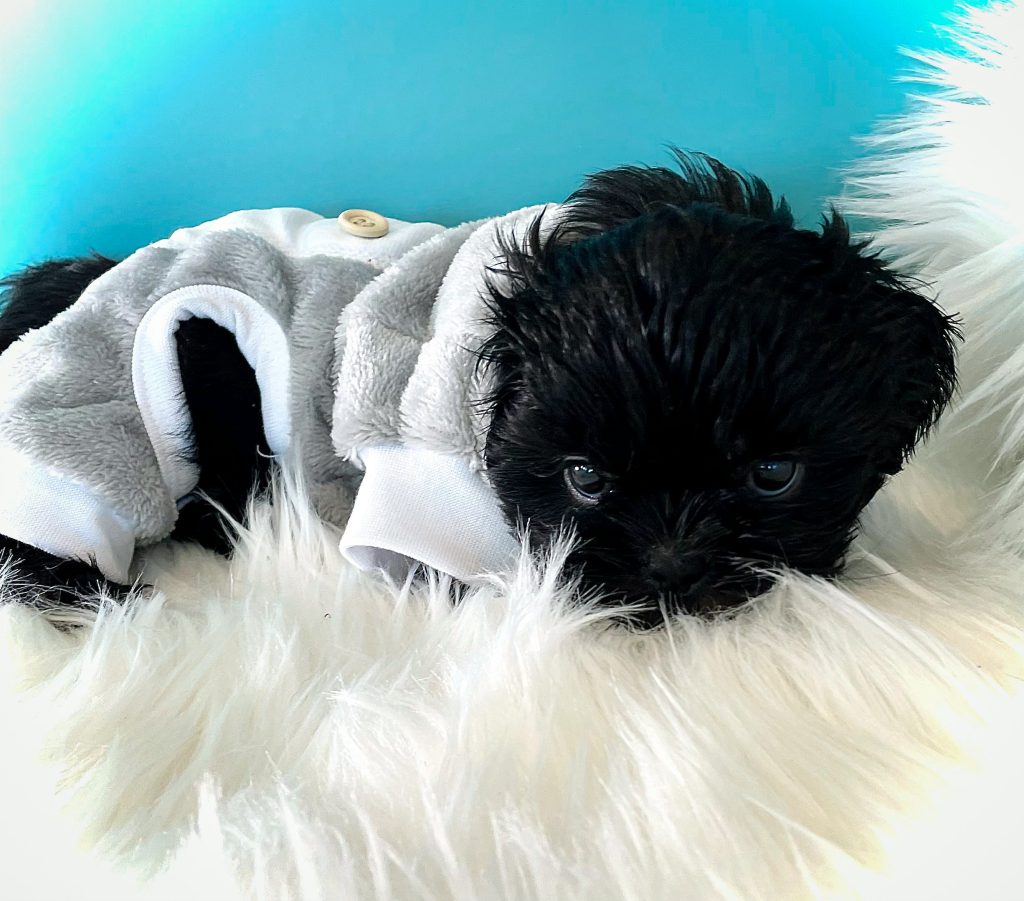
A solid black Shih Tzu puppy in pajamas resting on a white rug.
Protect your Shih Tzu from Chocolate Poisoning

Everybody loves chocolate!

Why would we expect our Shih Tzu to be exempt from the rule? Unfortunately, chocolate poisoning in dogs may have serious health implications. Avoiding chocolate toxicity in dogs is important if you want to keep your pet healthy. This means that we all need to be responsible dog owners. Preventing chocolate ingestion in the first place is key to optimal pet health. 

Keeping your Shih Tzu away from chocolate may be hard if you have young children. Picture the child sitting at the table with a dripping Rocky Road ice cream cone. I’ve raised three children. I can vividly remember this scenario back in the day. Unfortunately, this scenario can lead to a very sick dog.

I’m not saying to avoid chocolate Ice cream or other delicious chocolate treats. I’m simply saying to have a plan of action to protect your Shih Tzu from coming in contact with chocolate. For instance, maybe have your Shih Tzu in a different room or a playpen when consuming chocolate. This is especially important during the holidays when there is no shortage of delicious chocolate delicacies. 

Chocolate toxicity is even more of a risk in a small breed dog like a Shih Tzu. Shih Tzus are a toy breed and small in size. Shih Tzu Puppies are at an even higher risk of chocolate toxicity. Shih Tzu puppies are smaller than full-grown Shih Tzu. I am a Shih Tzu breeder. I am here to tell you that it doesn’t take much chocolate to make a four-pound Shih Tzu puppy ill.

The type of chocolate that your dog consumes is important to know if accidental consumption takes place. Dark chocolate is one of the most dangerous offenders because of the high amount of the toxic chemical theobromine. Typically the darker the chocolate, the higher the concentration of theobromine. Cocoa powder, baking chocolate, bittersweet chocolate, and milk chocolate also contain theobromine. 

Some of the most common signs of chocolate poisoning in dogs include the following:

  • Vomiting
  • Diarrhea
  • Lack of coordination
  • Frequent urination
  • Seizures
  • Loss of consciousness 

Please call your veterinarian immediately if you notice any signs of chocolate poisoning. Your vet may want you to induce vomiting with peroxide. Or, your doctor may want your pet to come into the clinic. It’s best to always consult with your veterinarian when it comes to your Shih Tzu’s health. If it is after hours or the weekend don’t hesitate to seek emergency veterinary services. If your dog is showing symptoms of chocolate toxicity time is of the essence. 

Share This Post
Previous

Benefits of Using a Food Rotation Diet With Shih Tzus

Next

Can Shih Tzus Get Valley Fever?

Filed Under: Education, Safety Tagged With: dog health

  • « Go to Previous Page
  • Page 1
  • Interim pages omitted …
  • Page 3
  • Page 4
  • Page 5
  • Page 6
  • Page 7
  • Interim pages omitted …
  • Page 15
  • Go to Next Page »

Footer

(480) 645-5553

Quick Links

  • FAQs
  • Shih Tzu Breed Information
  • Contract
  • Program & Pricing
  • Recommendations

Follow Us!

© 2026 • Arizona Sunrise Shih Tzus & Poos • All Rights Reserved • Website Design by Pixelvine Creative
  • Home
  • Program & Pricing
  • About
    ▼
    • My Journey
    • Dams
    • Sires
    • Transportation
    • Contract
  • Nursery
  • Reserve
  • Blog
  • FAQs
  • Contact
  • More
    ▼
    • Liver Shih Tzu Puppies
    • Shih Tzu Breed Information
    • Recommendations