
• Skip to primary navigation
  • Skip to main content
  • Skip to footer
Arizona Sunrise Shih Tzu & Poos Logo

Arizona Sunrise Shih Tzus & Poos

Purebred Shih Tzu Puppies

  • Home
  • Program & Pricing
  • About
    • My Journey
    • Dams
    • Sires
    • Transportation
    • Contract
  • Nursery
  • Reserve
  • Blog
  • FAQs
  • Contact
  • More
    • Liver Shih Tzu Puppies
    • Shih Tzu Breed Information
    • Recommendations

Education

My Breeder Education and Awards

August 2, 2022 By Deanna

Breeder education course certificate.
Breeder Education

I truly believe education is key to everything we do in life. This includes being an educated and responsible Shih Tzu breeder! The goal of my education is not only to breed responsibly but also to produce well-rounded Shih Tzu puppies that have all the tools necessary to succeed in their new homes.

I am constantly looking for ways to continue my breeder education. Knowledge truly is power. It is my mission to make sure all of my Shih Tzu puppies for sale have the very best upbringing. I learn new things that I can add to my responsible breeding program when I take a new class or read a new book on breeding.

Furthermore, I am passionate and love what I do. I truly enjoy learning as much as I can about the breeding field. I wouldn’t change my current career path for anything.

Below is a full list of my breeder education:

  • Good Dog Excellent Health Testing Award, Responsible Breeder Award.
  • Good Dog/AviDog Courses: Your Litter A to Z, Savvy Socialization, Breeding Foundations, Pre-Breeding, Litter Management, Pregnancy & Whelping.
  • American Kennel Club Certificates for completing the Whelping & Medical Intervention and Nutritional Influences on Reproduction Exams.
  • Midwoofery Courses: Breeder Basics: Litter Care, Managing Puppy Parasites, Canine Color Genetics, Canine Fertility and Timing.
  • Puppy Culture: The Powerful First 12 Weeks That Can Shape Your Puppy’s Future.
  • From Newborn to New Home: Madcap University
  • Puppy Evaluator Course and Badge: BAB/Empowered Breeder Program.
  • BAB/Empowered Breeder Courses: Choosing Breeding Pairs, Choosing Breeding Stock for your Program, Curriculum Planning-Raising Puppies According to Their Developmental Periods, Bottle and Tube Feeding, Placing Service, Therapy, Facility, and ESA Dogs, How to Imprint a Litter to the Diabetic Scent, Newborn CPR.
  • AKC Canine College Courses: ABC’s of Dog Breeding-Canine Genetics, Genetic Defects and Health, Breeding Systems, Kennel Blindness, Pedigree, Dog breeding-Selection.
Share This Post
Previous

Why I Genetically Test All My Adult Breeding Prospects

Next

Why Breeders Should Microchip Puppies

Filed Under: Education

Why I Genetically Test All My Adult Breeding Prospects

July 31, 2022 By Deanna

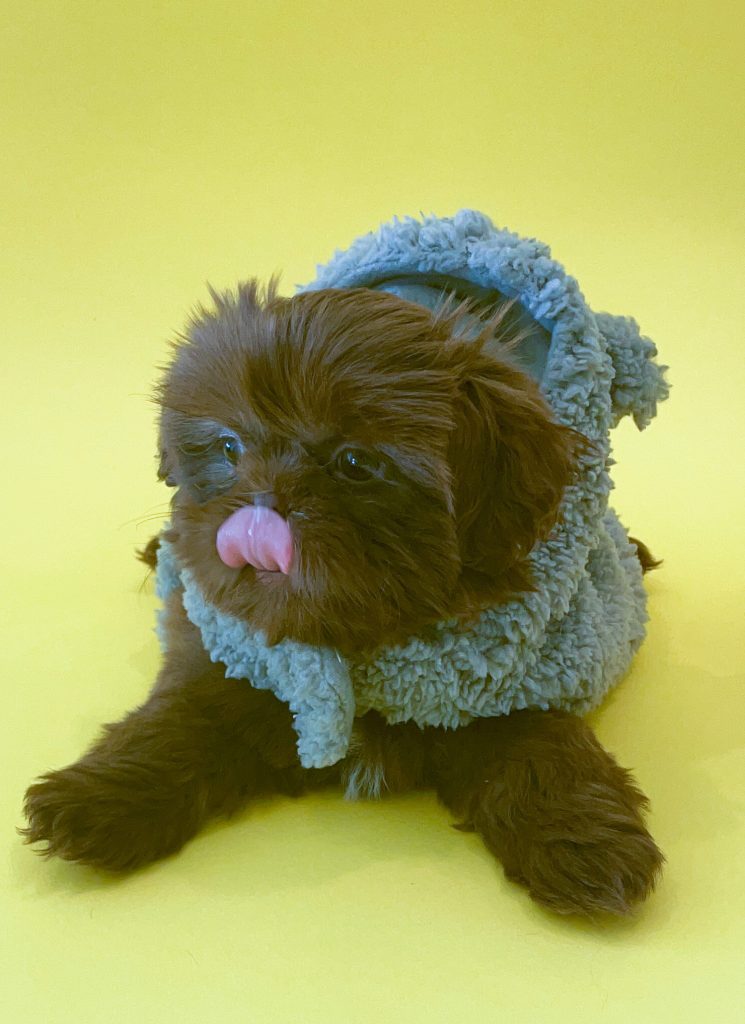
A purebred chocolate Shih Tzu puppy with his tongue out wearing a baby blue hoodie.
Shih Tzu Puppy From my Responsible Breeding Program

The Importance of Genetic Testing

All of my Shih Tzu puppies for sale come from parents who have gone through genetic testing to rule out health conditions they may carry in their lines. I take pride in my responsible breeding program. As a result, I am very careful when choosing which dogs I choose to include in my program.

I look at everything including temperament, confirmation, and health testing results. It is my goal to positively contribute to the breed and produce healthy, even-tempered Shih Tzus that will provide their new families with many years of unconditional love. 

Genetic testing is imperative to know what breed-specific health conditions my Shih Tzus carry in their lines. For instance, if I have two breeding dogs that are both carriers for a thyroid condition which is common in Shih Tzus, I wouldn’t want to use them as a mating pair. When a breeder pairs two carrier dogs they have the possibility of creating offspring with the actual disease.

Ideally, I breed clear dogs. Or, I breed a clear dog to a carrier which would only produce clear or carrier puppies. This is perfectly fine since the offspring will only be carriers and not be at risk of inheriting the actual disease.

The only exemptions I will make are if the disorder is benign and will cause no harm to the offspring or if the disease is not breed-specific and hasn’t been shown in research to be a problem in the breed. Responsibly pairing dogs for mating allows me to create healthy offspring instead of producing at-risk puppies.

Genetic testing also allows me to get an inside look at the different unique traits that my breeding adults carry. I use Embark genetic testing. When I DNA test my breeding adults, I receive a wealth of information including coat color and pattern genotypes, body size, muzzle length, etc. I also found out with certainty that my breeding adults are purebred Shih Tzus which is important! To learn more about the Embark genetic test that I use with my breeding adults check out the link: https://embarkvet.com/.

Each puppy in my responsible breeding program is sent home with a two-year congenital/genetic health guarantee as well. I am very confident in doing so because I have done the health testing suggested by the Shih Tzu National Breed Club. I go to sleep every night knowing that I did my very best to create healthy, purebred Shih Tzu puppies that will go on to hopefully live a long and healthy life. 

Share This Post
Previous

Decoding Common Dog Behaviors

Next

My Breeder Education and Awards

Filed Under: Education, Health Tagged With: dog genetic testing, dog health, responsible breeder

Decoding Common Dog Behaviors

July 29, 2022 By Deanna

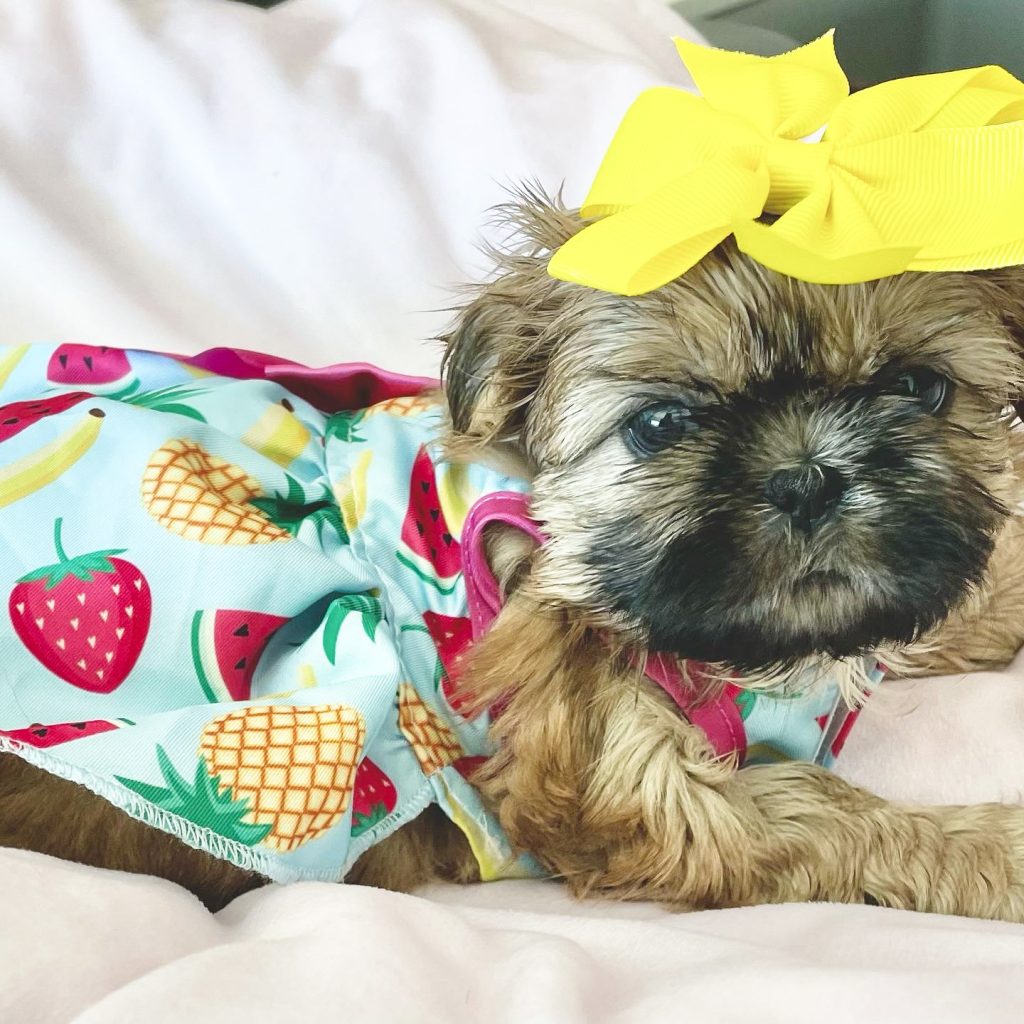
A gold female Shih Tzu puppy wearing a colorful dress with fruit on it and a giant yellow bow.
A Cute Shih Tzu Puppy all dressed up!

Common Dog Behaviors

Have you ever wondered what some of the behaviors dogs exhibit mean? Have you ever observed a dog shaking it off? For example, your dog runs around the yard and then comes inside and shakes it off before taking a nap. Dogs often shake it off after expending a high amount of energy. Dogs may shake it off after a bath as well. This shake may simply be your dog’s way of drying off. Or your dog may be super relieved to be set free and may shake to release some of the pent-up stress. 

Another phenomenon that dogs often commonly display is kicking their feet back. One reason that dogs kick their feet back is to communicate with other dogs. Dogs have sweat glands on the bottom of their feet which release pheromones that help them communicate with other canines. I’m sure we’ve all seen a dog mark their territory by kicking their feet back. In other words, the dog is saying “This is mine!” Many dogs also display this behavior after a potty break to mark their spot. 

Panting is another dog behavior that you’ll see frequently in your dog. Dogs cannot cool down by sweating like we do. Instead, they pant to regulate their body temperature. Panting can also be a sign that your dog is too hot. You must offer plenty of water and shade to avoid heat stroke. This is especially important if you live in a hot, dry climate like we have here in Arizona. Dogs can also pant if they are stressed or in pain so make sure to be in tune with your dog’s needs. 

On another not-so-pleasant note, let’s talk about butt scooting. Small breed dogs often scoot on their bums from time to time. This is often because of anal glands that need to be expressed. Your groomer will probably express them for you if your dog is groomed frequently. You can also ask your vet to express them if needed.

If it becomes a chronic issue try adding pumpkin powder or some other dog-friendly fiber to your dog’s diet. I list my favorite pumpkin powder supplement and all my other favorites under my Amazon list on my website at the bottom of the recommendations page. Butt scooting may also be a sign of parasites or worms so talk to your veterinarian if it becomes a chronic issue.

Howling is another behavior that dogs display on occasion. Dogs can howl for a variety of reasons. They may howl when they’re excited, anxious, trying to tell you something, in pain, or lonely. They also may howl when they hear certain high-pitched sounds like a squeaky toy. Overall, howling is our dog’s Innate way of communicating with the outside world. So next time your dog howls, take a moment to understand what they are trying to tell you.

I find it fascinating how much we can learn about our dogs just by observing their daily behaviors. They may not be able to communicate through words, but we can give them a voice if we take the time to pay attention to their nonverbal cues.

Share This Post
Previous

What Fruits and Veggies Are Safe for Your Dog

Next

Why I Genetically Test All My Adult Breeding Prospects

Filed Under: Behavior, Education Tagged With: dog behavior

What Fruits and Veggies Are Safe for Your Dog

July 27, 2022 By Deanna

We have all been told that we need to eat our fruits and vegetables to stay healthy at some point in our lives. Well, I am here to tell you that fruits and vegetables are wonderful snacks for dogs on occasion as well! Fruits and vegetables are full of antioxidants, vitamins, and minerals. I know, dogs are omnivores, but a slice of carrot from time to time is a great snack.

Furthermore, most dogs enjoy fruits and veggies on occasion. The Shih Tzu puppies I raise in my responsible breeding program love nothing more than a slice of red bell pepper. Just be sure to remove the skin, seeds, and pits from fruits and veggies before feeding. Also, cut the fruit or veggie into bite-size portions that aren’t likely to cause a choking hazard. Remember to limit portions as well. A large portion may cause gastrointestinal upset.

Always check and make sure that the fruits and vegetables that you offer your pet are safe. Many of the fruits and vegetables that we eat daily are toxic to dogs. For example, a couple of grapes are enough to possibly kill a toy breed dog! Below is a list of some safe and not-so-safe fruit and vegetable options. If you want a more in-depth list, I highly recommend installing an app like PupTox on your phone. It is always better to be safe than sorry when it comes to your dog’s health and well-being.

I hope you enjoy browsing the fruit & vegetable lists below. Furthermore, I hope you Shih Tzu enjoy the tasty yet healthy treat. Don’t forget to supervise your pet to avoid a choking incident.

Healthy Fruits and Veggies list

  • Banana
  • Blueberry
  • Strawberry 
  • Watermelon 
  • Cantaloupe 
  • Mango
  • Sweet bell peppers 
  • Carrots
  • Zucchini 
  • Sweet potato 
  • Spinach

Fruits and veggies to avoid

  • Grapes
  • Raisins
  • Currants
  • Tomato
  • Onion
  • Garlic
  • Avocado
  • Raw/green potato

Share This Post
Previous

How Much Should My Shih Tzu Weigh?

Next

Decoding Common Dog Behaviors

Filed Under: Education, Safety Tagged With: dog health, Dog safety

How Much Should My Shih Tzu Weigh?

July 25, 2022 By Deanna

A cute Shih Tzu puppy for sale sitting on a chair outdoors.
Sweet Shih Tzu

What is an ideal weight for a Shih Tzu?

Shih Tzus belong to the toy group of dogs. Shih Tzus typically weigh between 9 to 16 pounds when they reach adulthood. Shih Tzus are full-grown at approximately 10 months of age. It isn’t uncommon for a Shih Tzu to sometimes be above or below the breed standard. All of the Shih Tzu puppies for sale in my responsible breeding program typically weigh 9 to 16 pounds.

Overeating is one reason that a Shih Tzu might fall out of the 9-16 pound range. It’s important to make sure that you don’t feed your Shih Tzu too much. Shih Tzus are prone to weight issues if they eat too much. A few extra treats every day can quickly pack on the pounds. This can be a serious issue in a small breed dog.

The extra weight can put additional stress on your Shih Tzus internal organs and lead to health conditions and even premature death. New owners should watch for signs of weight gain. A simple way to check and see if your Shih Tzu is packing on the pounds is to see if you can feel the rib cage. If you cannot feel the ribs your pet is likely overweight.

On the opposite end of the scale, your Shih Tzu could be underweight. If your Shih Tzu weighs less than 9 pounds, is fully grown, and isn’t an Imperial Shih Tzu he or she may be underweight. You can check to see if your Shih Tzu is underweight by checking to see if you can feel the ribs. If the ribs are easily felt your Shih Tzu is possibly underweight. 

If your Shih Tzu is over or underweight it is important to discuss these findings with your veterinarian. Being overweight can lead to chronic health conditions. Being underweight can lead to malnutrition. Also, an under or overweight Shih Tzu may indicate that your pet is suffering from a medical condition that needs attention. Either way, make an appointment with your veterinarian so you can learn what steps to take to get your Shih Tzu back to an ideal weight. 

The takeaway here is that you should keep your Shih Tzu at an ideal weight. If your Shih Tzu is too thin or obese he or she could suffer from health problems down the road. Although it isn’t uncommon for a Shih Tzu to be a pound or two above or below the current weight guidelines it is still important to offer your Shih Tzu a balanced and healthy diet.

Plenty of exercise is another step in the right direction. It is equally important that you talk to your veterinarian if your Shih Tzu suddenly starts to lose or gain weight. Your veterinarian must rule out serious medical conditions. After all, a healthy Shih Tzu is a happy Shih Tzu!

Share This Post
Previous

An Inside Look at the Puppy Curriculum Calendar

Next

What Fruits and Veggies Are Safe for Your Dog

Filed Under: Breed Information, Education, Health Tagged With: dog health

An Inside Look at the Puppy Curriculum Calendar

July 23, 2022 By Deanna

The puppy socialization period officially starts at the end of week three and goes all the way through week 12. Breeders must provide puppies with a developmentally appropriate curriculum and appropriate socialization during this critical stage of development.

The puppies’ fear response is at an all-time low and curiosity is at an all-time high during weeks 3 to 12. Breeders must work with the puppies according to developmental benchmarks to provide puppies with the best outcome. Below is a timeline that summarizes some of the skills puppies learn through the puppy curriculum in my responsible breeding program. 

Please note that the timeline is just an estimate. I may need to adjust the calendar if a litter of puppies’ development isn’t aligned with the developmental benchmarks. For an inside look at the puppies working through curriculum check out some of my youtube videos: https://youtube.com/shorts/GuF2OCoxTEc?feature=share.

I highly recommend that you follow along on either Instagram or Facebookstories so you can watch your future puppy grow and work through daily curriculum objectives. I typically post every day under Instagram and Facebook stories from the day of birth until the puppies reach 10 weeks of age. You can also look at my Instagram Highlights if you want to see past litters working through curriculum. Once the puppies reach the 6 week mark they really start to shine. It is a pleasure helping the puppies become the very best version of themselves.

Puppy Curriculum Schedule

Week 1 & 2

  • Early Neurological Stimulation
  • Early Scent Introduction
  • Daily weight checks

Week 3

  • Early Neurological Stimulation
  • Early Scent Introduction
  • Sound desensitization 
  • Weekly weights
  • Handling desensitization/Gentle Grooming
  • Introduction to Gentle Novelty Exposure Items

Week 4

  • Sound desensitization
  • Handling desensitization
  • Gentle sensory experiences 
  • Gentle grooming practice
  • Introduction to the Puppy Recall
  • Introduction to puppy mush
  • Focus on gut health

Week 5

  • Sound desensitization 
  • Handling desensitization
  • Sensory desensitization
  • Gentle movement desensitization
  • Grooming practice
  • Puppy Recall
  • “Yes” Verbal Marker Training
  • Focus on gut health

Week 6 to 8

  • Sound desensitization 
  • Sight desensitization
  • Handling desensitization 
  • Sensory experiences
  • Movement desensitization 
  • Problem-solving
  • Startle/recovery
  • Balance and coordination
  • Barrier challenges
  • Mental Stimulation/Foraging/Brain games 
  • Grooming practice
  • Weekly one-on-one curriculum sessions with the breeder
  • Puppy Recall
  • “Yes” Verbal Marker Training
  • Open crate exposure
  • Introduction to playpen in the family room.
  • Turf Introduction
  • Focus on gut health
  • Exposure to different environments inside and outside of my home
  • Stroller rides
  • A basic introduction to the sit command
  • Confidence building activities

Week 9 to 11

  • Sound desensitization 
  • Sight desensitization
  • Handling desensitization
  • Sensory experiences
  • Movement desensitization 
  • Problem-solving
  • Startle/recovery
  • Balance and coordination 
  • Barrier challenges
  • Mental Stimulation/Foraging/Brain games
  • Grooming practice
  • Weekly one-on-one sessions with the breeder
  • Short alone-time sessions with a positive reinforcer
  • Puppy Recall
  • Open Crate Exposure
  • Travel crate exposure
  • Confidence building activities
  • “Yes” Verbal Marker Training
  • Neutral dog exposure (Intro to some of my adult dogs)
  • Outdoor expedition
  • Exposure to different environments inside and outside of my home
  • Car ride
  • Turf training
  • “Yes” Verbal Marker Training
  • Focus on gut health
  • A basic introduction to the “sit” command
  • Outdoor/screened room potty practice
  • Temperament Testing

Share This Post
Previous

Is Pet Insurance Necessary for a New Puppy?

Next

How Much Should My Shih Tzu Weigh?

Filed Under: Education, Socialization Tagged With: Puppy Curriculum

  • « Go to Previous Page
  • Page 1
  • Interim pages omitted …
  • Page 8
  • Page 9
  • Page 10
  • Page 11
  • Page 12
  • Interim pages omitted …
  • Page 15
  • Go to Next Page »

Footer

(480) 645-5553

Quick Links

  • FAQs
  • Shih Tzu Breed Information
  • Contract
  • Program & Pricing
  • Recommendations

Follow Us!

© 2026 • Arizona Sunrise Shih Tzus & Poos • All Rights Reserved • Website Design by Pixelvine Creative
  • Home
  • Program & Pricing
  • About
    ▼
    • My Journey
    • Dams
    • Sires
    • Transportation
    • Contract
  • Nursery
  • Reserve
  • Blog
  • FAQs
  • Contact
  • More
    ▼
    • Liver Shih Tzu Puppies
    • Shih Tzu Breed Information
    • Recommendations