• Skip to primary navigation
  • Skip to main content
  • Skip to footer
Arizona Sunrise Shih Tzu & Poos Logo

Arizona Sunrise Shih Tzus & Poos

Purebred Shih Tzu Puppies

  • Home
  • Program & Pricing
  • About
    • My Journey
    • Dams
    • Sires
    • Transportation
    • Contract
  • Nursery
  • Reserve
  • Blog
  • FAQs
  • Contact
  • More
    • Liver Shih Tzu Puppies
    • Shih Tzu Breed Information
    • Recommendations

Education

Survival Tips for Your Puppy’s First Few Days at Home

December 16, 2022 By Deanna

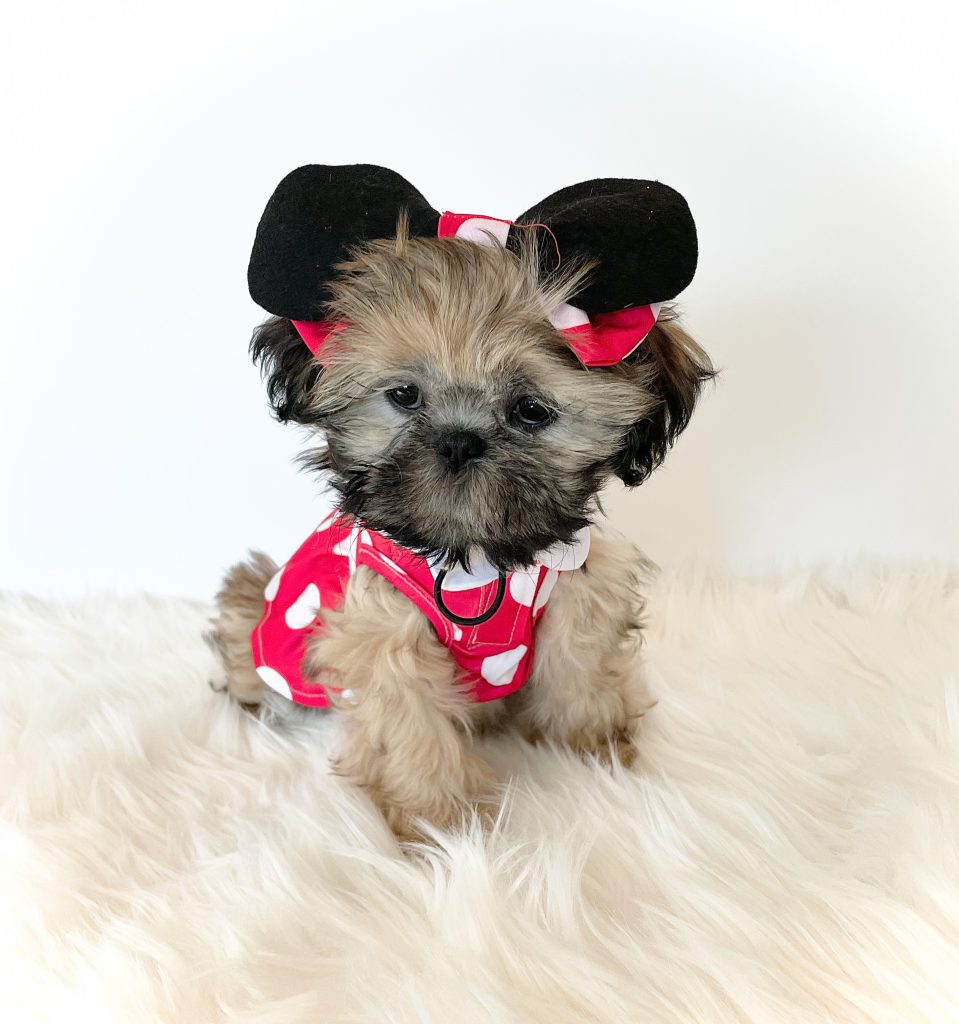
A gold female Shih Tzu puppy for sale dressed up in a red, white and black Minnie Mouse costume.
Puppies Bring So Much Joy to Those That Love Them

Bringing home a new puppy is super exciting! But, the first few days with your new puppy may be challenging. Your puppy will need time to acclimate to his/her new home environment. Your puppy has been taken away from everything that he or she has ever known. Your puppy may whine in the playpen and you may have some sleepless nights. The good news is it will pass. Your puppy will acclimate.  Just remain patient while your puppy adapts to his/her new surroundings.

Below are some tips that may help the first few days go more smoothly.

  • Take your puppy potty in the desired location as soon as you get home. 
  • Gradually introduce your new puppy to family members. Remember, your puppy may take time to acclimate. It’s best to go slow. 
  • Be cautious when introducing your puppy to your other house pets. Puppies are jumpy! Read the blog post I wrote on how to safely introduce two dogs to each other if you want specific tips for success. Not all pets are comfortable with a jumpy puppy. Your pets will need time to become used to one another.
  • You may want to attach a leash to a harness when your puppy is out of the playpen for safety and control.
  • Your puppy may not be very hungry the first day or two. He or she may not eat a full meal at each sitting. Until your puppy is eating well, I recommend feeding frequently and leaving dry kibble out all day.
  • Offer your puppy plenty of praise and treats to start building a positive bond.
  • If your puppy is refusing kibble the first few days offer a fresh or canned option. If you don’t have any fresh or canned food options available, soak kibble in water for a couple of hours. puppies usually find soaked kibble very palatable. Or, grind up some freeze-dried chicken hearts or liver treats and sprinkle it onto their kibble.
  • Book your vet appointments ahead if possible. Veterinarians often book out months in advance. Puppies need booster shots every 3 to 4 weeks until the puppy vaccination series is complete.
  • When you take your puppy for puppy vaccinations, remember all 4 paws off the floor! I cover the exam table and scale with a throw-away potty pad after wiping everything down with a disinfectant wipe. Also, make sure staff washes their hands before handling your puppy. First thing in the morning appointments are helpful. I use a puppy stroller with a detachable base to transport my dogs to the vet. Some of the stroller options even clip to the seatbelt.
  • Ask your breeder to send your puppy home with a blanket or toy with Mom and the littermates’ scent to help with anxiety. Snuggle puppies are a great purchase for calming as well.
  • A Kong, a safe puppy chew, a puppy puzzle, a lick mat, or a snuffle mat are great tools for keeping your puppy busy while in the playpen. 
  • I advise filtered water for your puppy. We have reverse osmosis in our home. I feel it helps prevent tear staining as well.
  • Puppies can sometimes get loose stools from stress. Canned PLAIN pumpkin can be helpful. Avoid feeding table scraps. 
  • Remember, a tired puppy is a well-behaved puppy. Play with your puppy often! Your puppy needs exercise. Short exercise sessions will help your puppy remain calm in the playpen. 
  • I recommend purchasing a playpen to serve as your puppy’s living space until potty training is well underway. This is a safe place for your puppy to stay when you’re not able to supervise. I prefer the playpen set up to the crate because it gives the puppies more room to play and move around. If you’re worried about your flooring. You can place a large piece of Linoleum or Garage grip flooring under the playpen. The flooring options can be found at Home Depot. They typically have inexpensive remnant linoleum rolls in the flooring section.
  • Your puppy is teething. Be patient and offer a chew toy as an alternative if your puppy tries to chew on your hand. Wet frozen washcloths help as well.
  • If you are going to use an artificial turf potty pad or paper pad in the playpen I recommend that you purchase a potty tray system that holds everything in place. Your puppy will chew up the paper pad underneath if it isn’t secure.
  • I recommend bathing your puppy every 4-6 weeks. Bathing too often can dry out the skin. I love the TropicClean line.
  • I clean the puppy living quarters with nontoxic floor products such as Method, Seventh Generation, Simple Green, etc.
  • Whenever you walk up to the puppy playpen to greet your puppy stand as far away from the potty and food area. Your puppy will rush over to see you and may accidentally step in the food or water bowl or step on poop.
  • When you walk up to the playpen remain still and avoid petting your puppy until he or she is calmly sitting. Then offer praise and or a reward. I try not to pet the puppies until they’re sitting calmly.
  • I do the same thing with feeding. I stand calmly with the food bowl or treat. I wait patiently until the puppies are sitting quietly. Then I offer the food.
  • Remember to always reward positive behavior and redirect negative behavior when possible!

Share This Post
Previous

What are the Best Chews for Shih Tzus?

Next

New Shih Tzu Puppy Essentials

Filed Under: Education Tagged With: new puppy

What are the Best Chews for Shih Tzus?

December 14, 2022 By Deanna

A gold Shih Tzu puppy from my responsible breeding program wearing an orange and gray sweater.
Shih Tzu Puppy’s Love Chews

Chews can be an excellent form of enrichment for your Shih Tzu. I introduce a variety of chews to the Shih Tzu puppies raised in my responsible breeding program. Chews are a great way to keep your puppy or dog busy and they also have the added benefit of cleaning the teeth. But, when it comes to chews it is important to make sure that the chew in question isn’t going to cause a choking hazard or an intestinal blockage in your pet. For example, treats such as rawhide and bones are not recommended in small-breed dogs.

Below I will list some different types of chews and some pros and cons for each kind:

  • Deer or Elk Antlers last an awesome long time. Antlers are natural, odorless, and a nutritious chewing option. They’re very hard which makes them great for teeth cleaning. In general, split antlers are a bit softer which makes them safer and easier on your dog’s teeth. Antlers may splinter which can be a medical emergency so always supervise.
  • Bully sticks are another option that is easily digestible, natural, and great for giving your dog something to do. They come in all sorts of shapes and sizes. I haven’t met a dog to date that doesn’t love bully sticks! On the downside, some varieties have a bad odor. Furthermore, bully sticks can become a choking hazard for aggressive chewers. Supervision is essential to avoid a medical emergency. They also sell bully stick holders to prevent your dog from swallowing the end piece. But remember, bully stick holders are not a replacement for supervision.
  • Tendons are flexible long-lasting chews that are great for dental hygiene as well! Chewing is a great way to prevent tartar and plaque. Tendons aren’t hard like bones so losing a tooth is less likely. But like all the other options mentioned so far, they may pose a choking hazard if swallowed.
  • Nylon Chews are relatively durable and long-lasting. They come in all kinds of shapes and sizes. They are relatively inexpensive and are great for satisfying the chewing urge. Nylon chews are hard and may pose a dental risk for the avid chewer. Aggressive chewers may even find a way to split the chew which can lead to dangerous splinters.
  • Pig Ears are a popular, natural chew that won’t drain your wallet. Pig ears are pretty soft and not as likely to lead to dental injuries. Beware of power chewers that may chew too quickly and swallow pieces of the ear. This could lead to an intestinal obstruction or choking.
  • Collagen Chews are relatively safe for your dog. They come in a variety of shapes and sizes. They’re easily broken down and not as likely to cause an intestinal obstruction. As always supervise to prevent choking even if this risk is minimal. Furthermore, you may want to limit the amount of time your dog spends chewing to prevent tummy issues. Many of the chews can lead to an upset stomach if overindulgence takes place.
  • Kongs are another great chew option for dogs. They can be stuffed with all sorts of ingredients to keep your pup busy. Kongs are safe for the most part but an assertive chewer may find a way to break it apart which can cause dental issues and a choking hazard.

As you can probably now see, no chew is 100 percent safe. Yes, chews are an excellent form of enrichment. But, they are not a replacement for human supervision. You must monitor your dog when he or she is interacting with chews. Some of my personal favorites are bully sticks, tendons, and Kongs. I haven’t tried Antlers or Collagen chews but may in the future. Please make sure all chews are made and sourced in America for safety reasons. For further information on my favorite chews check out my Amazon wish list: https://www.amazon.com/hz/wishlist/ls/31T4PG3CU0ND3/ref=nav_wishlist_lists_4.

I typically limit chew sessions to half an hour once or twice a day. Also, always take into consideration your dog’s chewing style. If your dog is an aggressive chewer a Kong may be a better choice than a bully stick. Splintering, dental issues, and intestinal obstructions are real concerns that you will want to prevent at all costs. If you’re uncertain about what type of chew is best for your beloved pet consult with your Veterinarian. Your Veterinarian will most likely have his or her recommendations.

Share This Post
Previous

How to Recognize Normal Behavior in Shih Tzu Puppies

Next

Survival Tips for Your Puppy’s First Few Days at Home

Filed Under: Education, Safety Tagged With: Dog safety, pet safety

How to Recognize Normal Behavior in Shih Tzu Puppies

December 12, 2022 By Deanna

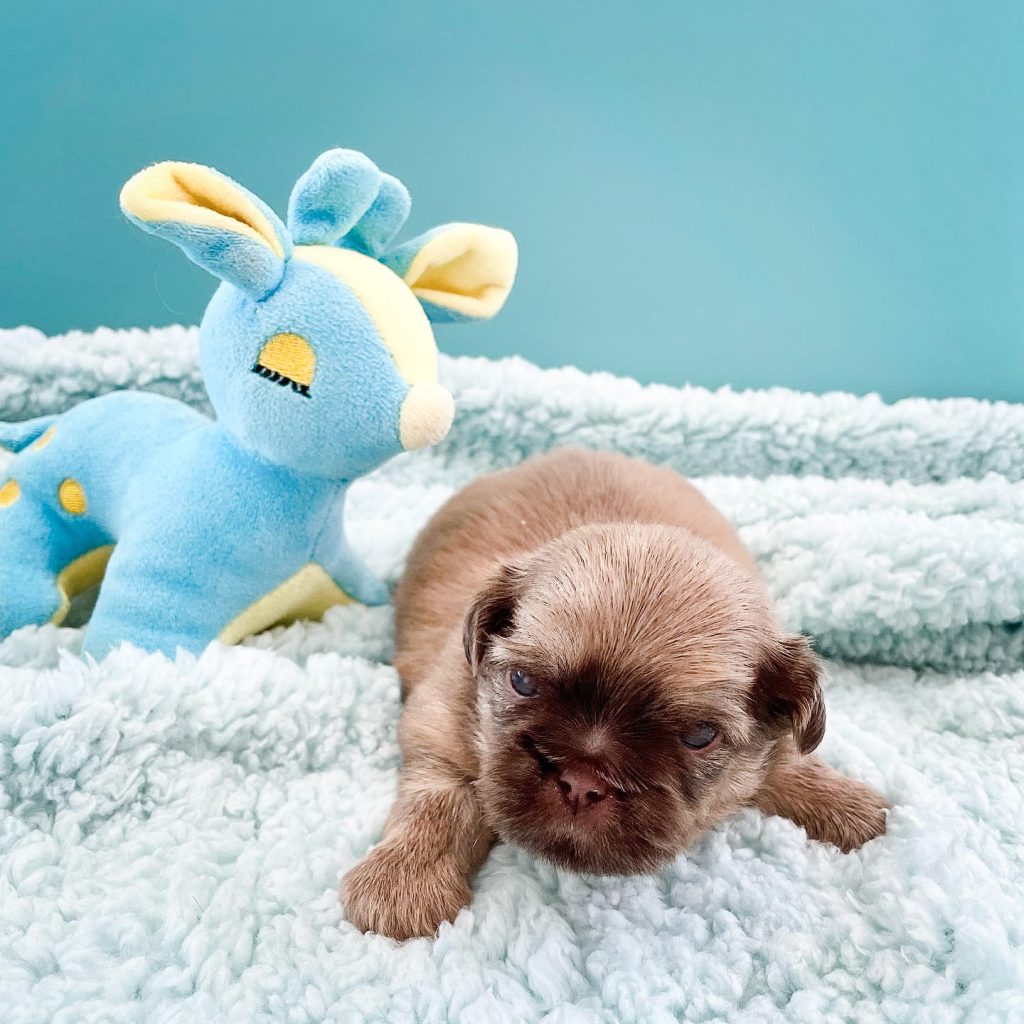
An available liver Shih Tzu puppy laying on a fuzzy baby blue blanket next to a stuffed toy.
A Liver Shih Tzu Puppy


So you have finally brought your new puppy home from a reputable Shih Tzu breeder. You’re super excited to do everything in your power to properly raise your Shih Tzu puppy. You have bought books on everything from potty training to teaching your new puppy simple commands like how to sit.

Life is going great! Then one day you’re playing with your sweet Shih Tzu puppy and he nips your finger hard! Unfortunately, mouthing, chewing, and biting are normal puppy behaviors. This behavior is similar to a baby teething. All puppies teethe and seek out something to chew on to relieve the discomfort. I am here to tell you that anything is a game including your fingers. I typically tell my Shih Tzu puppy owners to always have a chew toy in hand when playing with a teething puppy. Simply redirect by offering the toy instead of your hand. If the behavior continues discontinue the play session and try again with a chew toy in hand when the puppy calms down.

Jumping up to greet guests is another normal puppy behavior. Puppies are full of energy and get super excited when it comes to receiving human attention. I recommend staying very still, folding your arms, and ignoring your puppy until he or she has stopped jumping up. Then show your puppy attention. This method will reward appropriate behavior while ignoring the negative behavior. I also advise training simple commands like sit and stay which will help tremendously.

Curiosity is another common puppy behavior. Your new puppy is learning all about this great big world. Puppies are often eager to explore their new environment. This heightened curiosity is great but must also be managed appropriately. Your puppy could easily become injured if he or she becomes curious about your house plant and decides to take a nibble for instance. Many plants and other items in the average pet home are toxic to dogs. It is essential to safety-proof the home before your curious puppy arrives. An app like PupTox is a great idea as well. I also suggest keeping your puppy in a playpen when you’re unable to supervise until trained.

Below, I have put together a list of some of the most common puppy behaviors. Some of the more undesirable behaviors can be properly managed through training. Also, remember that your puppy will mature and outgrow many of these behaviors over time. In the meantime, I advise being patient and consistent with training. Before you know it, your puppy will become an amazing well-trained member of your family.

Common Puppy Behaviors:

  • Curious about everything
  • Energetic (Puppy Zoomies)
  • Affectionate
  • Barking and vocalizing
  • Mouthing and chewing
  • Chasing anything that moves
  • Whining
  • Jumping up
  • Short attention span
  • Pouncing
  • Putting everything and anything in their mouths
  • Vigorously shaking toys
  • Shredding potty pads, toys, beds
Share This Post
Previous

How To Properly Clean Your Shih Tzu’s eyes

Next

What are the Best Chews for Shih Tzus?

Filed Under: Behavior, Uncategorized Tagged With: new puppy, puppy behavior, puppy development, Puppy Training

How To Properly Clean Your Shih Tzu’s eyes

December 8, 2022 By Deanna

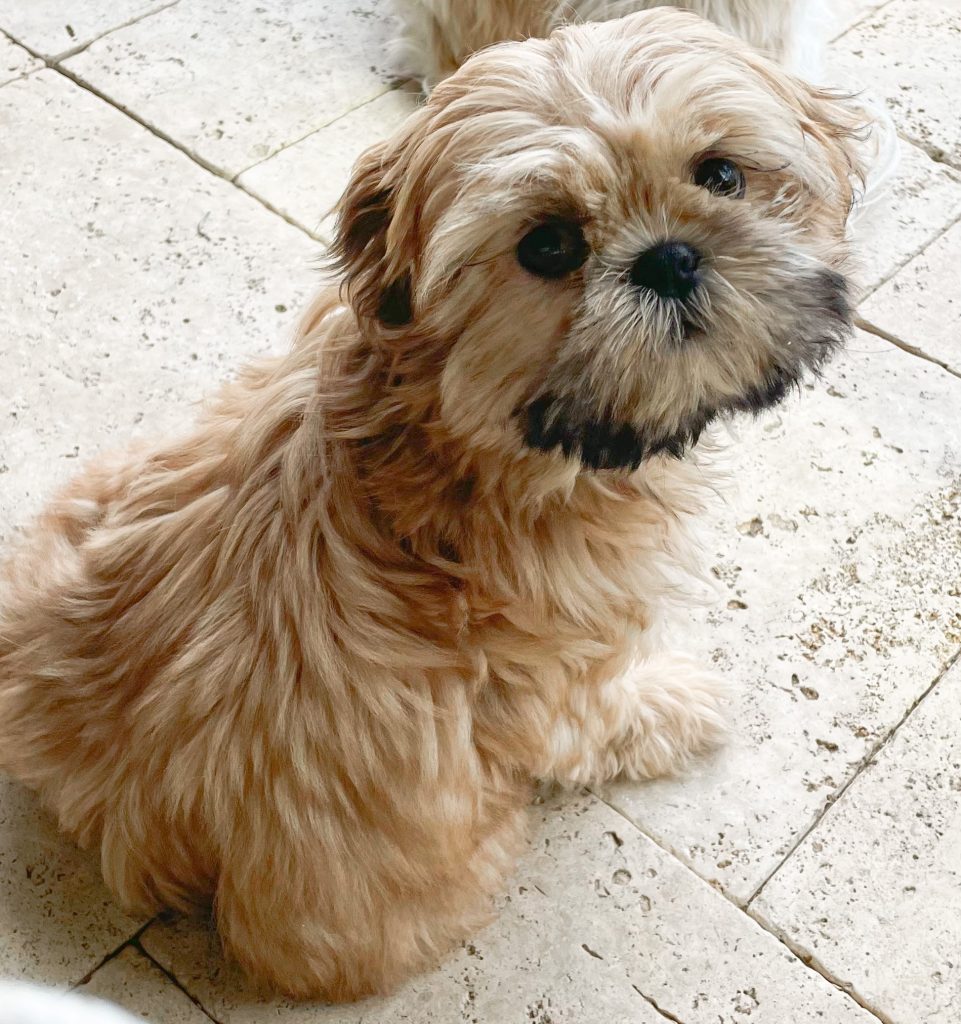
Available female Shih Tzu puppy from my breeding program sitting outdoors.
Eye Cleaning is Important in the Shih Tzu Breed

Shih Tzus is no exception when it comes to eye care. You must take proper care of your Shih Tzu’s eyes. Shih Tzus are a brachycephalic breed. They have a relatively flat face and protruding eyes. This puts them at a higher risk for eye problems. As a result, Shih Tzu owners must take excellent care of their eyes through appropriate cleaning protocols.

I recommend cleaning your Shih Tzus eyes daily if possible. It shouldn’t take you more than a few minutes to complete the procedure. You can schedule to clean your Shih Tzu’s eyes when you do your daily brushing if that is easier. Your groomer may clean your pet’s eyes during appointments as well.

Shih Tzu Eye Cleaning Basics:

I like to use an antimicrobial eyewash like Vetericyn. I saturate a cotton ball in the cleaning solution and clean the eye area. I start in the corner and gently massage to loosen up any gunk that may have become lodged in the area.

Next, I take a tick comb and gently work from the corner away from the eye to remove the gunk. I repeat until the eye hair is free of visible debris. Finally, I pat the area dry with a clean cotton swab or a dry washcloth.

Be sure to contact your veterinarian and make an appointment if you ever notice symptoms of an eye infection. Symptoms include red irritated eyes often accompanied by a discharge. Hopefully, daily eye cleaning will help prevent infections. But, if an infection does occur your veterinarian will most likely need to provide prescription eye drops. It is important to not postpone appropriate treatment.

Share This Post
Previous

Puppy Developmental Periods Defined

Next

How to Recognize Normal Behavior in Shih Tzu Puppies

Filed Under: Education, Grooming Tagged With: dog health, puppy health

Puppy Developmental Periods Defined

December 5, 2022 By Deanna

All puppies go through developmental periods where they develop behavioral habits that stick with them throughout their lifespan. All breeders including Shih Tzu breeders need to instill appropriate behaviors that line up with the developmental periods. Responsible breeders should set program goals that align with the puppies’ developmental needs.

It is important to meet litter needs in a developmentally appropriate fashion. Working a litter too fast, too slow, or in an improper manner may have detrimental effects on the puppies in the litter. A good breeder will know when and how to properly socialize. The key is breeder education! Knowledge is power!

Below is a list of the developmental periods that puppies go through:

Birth to 2 weeks-(The Neonatal Period)-Puppies rely heavily on their mother. They rely on their sense of smell, taste, and touch to get around the whelping box.

2-3 weeks-(The Transitional Period)-The puppy’s eyes and ears begin to open. Puppies become more aware of littermates and begin to try to walk.

3-12 weeks-(The Socialization Period)-This is the prime time for a breeder to properly socialize puppies. Puppies should also remain with their mother and littermates for most of this period to learn important skills such as bite inhibition. Puppies absorb everything very quickly during this stage. Also, fear is at an all-time low, minus short fear periods. A good breeder will know how to recognize a fear period and will adjust the curriculum until the fear period comes to a halt.

Puppies should be exposed to a wide range of stimuli during this sensitive period as well to promote ideal brain and emotional development. Working puppies through a developmentally appropriate curriculum during this stage is of utmost importance. Puppies learn faster and quicker during this period than in any other period of development. The socialization period only takes place once in a dog’s lifetime!

13 weeks to puberty-(Juvenile Period)-A puppy’s early behavioral habits begin to take even more shape. This stage is often equivalent to the human teenage years! Puppies are growing rapidly, have a newfound independence, bounds of energy, and hormones are starting to surge. Puppy training will be of incredible benefit during this stage.

6 months to adulthood-(The Adolescent Period)-Much of your puppy’s behavior is now solidified. Training is still very beneficial to continue reinforcing behaviors that are desirable. This period ends when social maturity is reached. The timeline varies depending on the breed. Shih Tzus are typically fully grown by 10 months of age.

Share This Post
Previous

Why is my Puppy Whining all the Time?

Next

How To Properly Clean Your Shih Tzu’s eyes

Filed Under: Behavior, Education Tagged With: Puppy Curriculum, puppy development, Puppy Training

Why is my Puppy Whining all the Time?

November 29, 2022 By Deanna

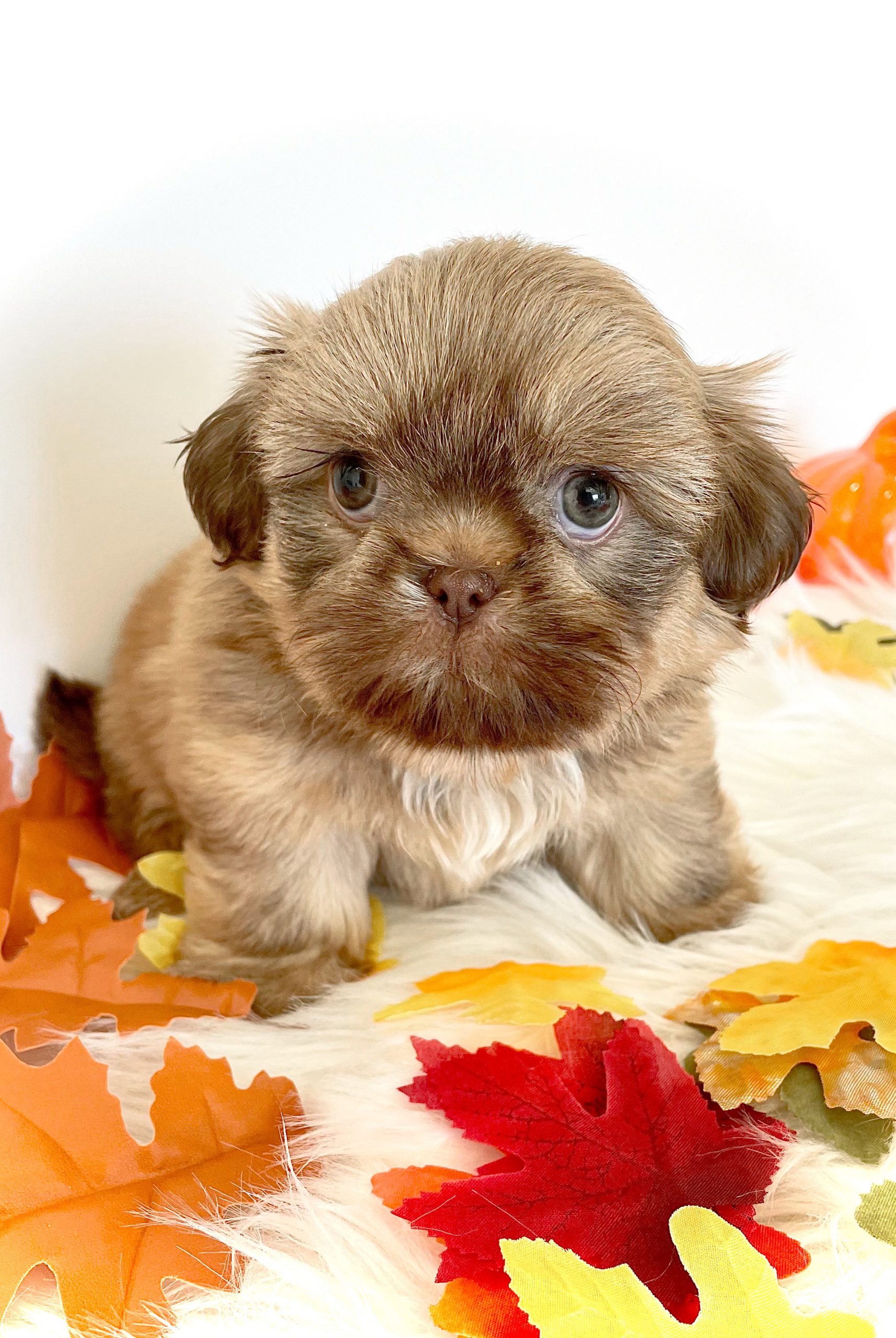
purebred liver Shih Tzu puppy sitting on a blanket full of fall leaves.

I always tell my clients that having a new puppy in the home is equivalent to having a new baby. Puppies like babies are not able to use their words to tell us how they feel. Whining or crying is your puppy’s way of trying to tell you something. Puppy owners must learn to speak their new puppy’s language.

Also, try and remember to be patient! Your puppy has just been taken away from everything he or she has ever known. Whining in the beginning is very normal. The good news is that puppies are very adaptable. With love, guidance, and patience they will grow into amazing family members.

One of the most common reasons for whining will be your puppy’s need for human attention. If your puppy cries whenever you enter the room your puppy might be craving human touch. When it comes to temperament, some puppies have a high human focus. They’re like stickers. They always want to be stuck to you!

This doesn’t mean you should always pick your puppy up every time he or she whimpers. Remember when I said that puppies are like babies? It is your job to figure out why your new baby is crying. You don’t want to pick up your puppy every time he or she whimpers. This will just teach your puppy that whining is an acceptable behavior.

Instead, I recommend first and foremost, making sure your puppy’s needs are met. Does your puppy need a hug and cuddle session with his or her favorite humans? Has your puppy eaten enough and had plenty to drink? Does your puppy need to go potty? Is your puppy in need of an exercise session or some mental stimulation? Is your puppy still acclimating to his or her new home and missing mom or siblings? Is your puppy not feeling well?

Once you find out why your puppy is whining it will be much easier to meet his or her basic needs. On the other hand, remember you don’t need to pick up your puppy every time he or she cries. Your puppy needs to learn how to self-soothe. You can help the process go smoothly by providing your puppy with a snuggle puppy and toys that provide mental stimulation. Feel free to browse my list of ideas for keeping your puppy busy here.

Tip for Success

I thought it would be great to end this blog post with a tip that I feel helps with puppy whining. Whenever you’re getting ready to pick up your puppy stand in front of him or her and freeze. Avoid picking up your puppy until he or she is calm and remains still.

This way you’re not rewarding the negative jumping up and whining behavior. You may have to walk out of sight and watch from a distance until you see the desirable behavior if your puppy is relentless. When you catch your puppy being calm and displaying appropriate behavior pick him or her up and give a big hug, praise, and maybe even a treat!

Always remember to reward the positive and ignore the negative when it comes to whining. The exemption to the rule is if your puppy is hurt. In this case, don’t hesitate to contact your veterinarian. A good trainer will come in handy as well! Follow the following link if you desire more information on online puppy school from Baxter & Bella: https://www.baxterandbella.com/.

They always say it takes a village to raise a child properly. I believe it takes a village to raise a puppy properly as well! If everyone in the family is on board, consistent, and patient the puppy will have all the tools necessary to be successful. In no time at all your puppy will be grow up and you will miss the puppy days of the past.

Share This Post
Previous

How to Safely Introduce Two Dogs to Each Other

Next

Puppy Developmental Periods Defined

Filed Under: Behavior, Education Tagged With: new puppy, Puppy Training, puppy whining

  • « Go to Previous Page
  • Page 1
  • Interim pages omitted …
  • Page 6
  • Page 7
  • Page 8
  • Page 9
  • Page 10
  • Interim pages omitted …
  • Page 15
  • Go to Next Page »

Footer

(480) 645-5553

Quick Links

  • FAQs
  • Shih Tzu Breed Information
  • Contract
  • Program & Pricing
  • Recommendations

Follow Us!

© 2026 • Arizona Sunrise Shih Tzus & Poos • All Rights Reserved • Website Design by Pixelvine Creative
  • Home
  • Program & Pricing
  • About
    ▼
    • My Journey
    • Dams
    • Sires
    • Transportation
    • Contract
  • Nursery
  • Reserve
  • Blog
  • FAQs
  • Contact
  • More
    ▼
    • Liver Shih Tzu Puppies
    • Shih Tzu Breed Information
    • Recommendations