• Skip to primary navigation
  • Skip to main content
  • Skip to footer
Arizona Sunrise Shih Tzu & Poos Logo

Arizona Sunrise Shih Tzus & Poos

Purebred Shih Tzu Puppies

  • Home
  • Program & Pricing
  • About
    • My Journey
    • Dams
    • Sires
    • Transportation
    • Contract
  • Nursery
  • Reserve
  • Blog
  • FAQs
  • Contact
  • More
    • Liver Shih Tzu Puppies
    • Shih Tzu Breed Information
    • Recommendations

Education

Is Pet Insurance Necessary for a New Puppy?

July 21, 2022 By Deanna

Are you on the fence in regards to buying pet insurance for your new puppy? Is it worth it? How likely is it a puppy will get ill anyway? If you find yourself asking these questions you’re not alone!

Buying a new puppy is a huge responsibility and can be very costly. Racking up a monthly insurance fee can put an even bigger burden on new puppy owners. Below, I will list a few of the pros and cons of purchasing puppy insurance. Hopefully, the information will help new puppy owners make informed and educated decisions regarding purchasing puppy insurance. 

Pet Insurance Pros:

Let’s start with the pros. The good news is that pet insurance premiums are usually much lower for puppies compared to older adult dogs. Some companies even offer new puppy owners a complimentary month of pet insurance.

For instance, I send all my Shih Tzu puppies for sale home with one month of free puppy insurance through Trupanion: https://trupanion.com/. Furthermore, unlike human insurance, pet insurance usually doesn’t come with as many restrictions. Puppy owners typically can choose the vet of their choice and deductibles aren’t usually too unreasonable. 

Another pro is that new puppy owners will sleep easier knowing that their puppy is covered financially if an unthinkable medical emergency ever happens. I’m here to tell you that the unthinkable can happen. Puppies are notorious for getting into everything! Our first puppy Izzy swallowed a piece of chewing gum that contained xylitol when she was little. Xylitol is extremely toxic to dogs. It doesn’t take much xylitol to cause a toxic reaction in a toy-breed dog. Fortunately, Izzy was okay after having her stomach pumped. Let’s just say that the emergency vet visit after hours wasn’t cheap. 

Pet Insurance Cons:

Now for the cons of having pet insurance. Pet insurance doesn’t cover everything. Some things like routine vet exams may be considered an out-of-pocket cost. Puppy clients may need to shop around to find the best bang for their buck as well. Also, it’s important to set aside money for vet emergencies to cover expenses until claims are processed. If you don’t plan on purchasing pet insurance it is even more essential to put aside money for pet emergencies. 

Some of the lower-priced plans exclude certain diseases from coverage as well. Often clients need to go with a higher priced plan to get the coverage they’re looking for. There’s also the possibility that your puppy remains super healthy and never encounters any true emergencies. In that case, you’ve shelled out a lot of money. Nobody wants to waste money, especially in today’s economy.

In the end, it is up to each new puppy owner to decide whether or not pet insurance is worth the money. It is sort of a gamble. On the one hand, your pet could be blessed with perfect health and suffer no true emergencies. On the other hand, your pet could be a victim of an unfortunate medical emergency. Life doesn’t come with a guarantee for humans or animals. Either way, a responsible pet owner will front the cost to make their pet well again regardless of whether it is through pet insurance or money put aside for unforeseen pet emergencies. After all, our pets are family and we love them unconditionally to the very end.

Share This Post
Previous

How Much Does a Shih Tzu Puppy Cost?

Next

An Inside Look at the Puppy Curriculum Calendar

Filed Under: Education, Health Tagged With: pet safety

How Much Does a Shih Tzu Puppy Cost?

July 20, 2022 By Deanna

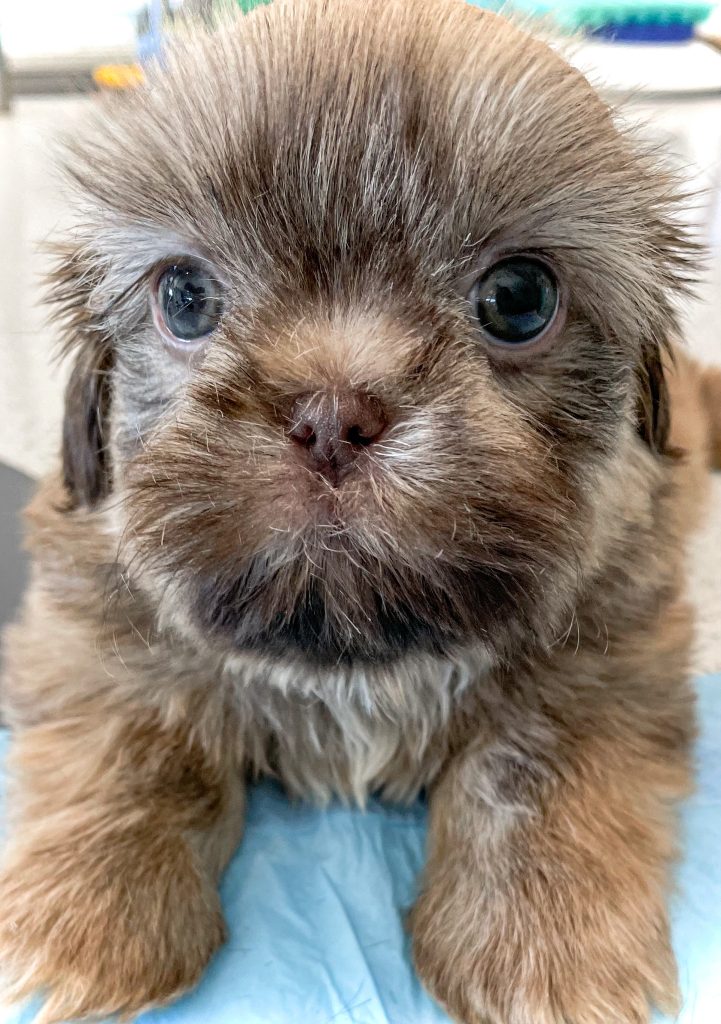
A purebred chocolate and white Shih tzu puppy for sale posing for a photo.
Purebred Chocolate Shih Tzu Puppy

Quality Really Does Matter

You may wonder how much it will cost to buy a purebred Shih Tzu puppy. The answer is rather complex. You can probably purchase a Shih Tzu puppy for as little as $500. But, you probably will know very little about the puppy’s upbringing. There is so much that goes into properly raising a litter of Shih Tzu puppies.  

I’ll give you two scenarios. Then, you can decide for yourself which Shih Tzu breeder you would prefer to buy a puppy from. Breeder A carefully chooses purebred breeding stock that pass breed specific health testing recommendations by the national breed club. This breeder also chooses breeding prospects that have excellent temperaments since temperament is partially genetic. Breeder A takes several classes and receives a top notch education so she can provide her adult dogs and future puppies with the best upbringing. Adult dogs and puppies spend their day in the home as part of the family and receive the very best life has to offer.

Furthermore, all of the available Shih Tzu puppies participate in daily puppy curriculum activities. This helps to ensure that the puppies get the very best start in life. Proper socialization is critical when it comes to puppy development. All of the Shih Tzu puppies also stay with their mother and littermates during this crucial time period. Puppies go through temperament testing before being sent home with families as well. Temperament testing helps clients choose a puppy that is suitable to their unique lifestyle.

Breeder B purchases breeding stock through a classified ad. The parents haven’t had any health or temperament testing to check for life threatening diseases or aggression in the lines. The breeder has very little education in regards to puppy rearing. The adult dogs and puppies spend their entire day and night in cages with very little human contact. Puppies are sent home with anyone who is willing to pay the price at 7 or 8 weeks of age before the critical socialization period is over.

As you can see from the two examples above, a lot goes into a responsible breeding program. Purchasing a Shih Tzu puppy that may have health or behavioral issues down the road is a big commitment. A bargain puppy could very well end up costing a new puppy owner more in the end when major health issues possibly pop up down the road.

Alternatively, a puppy mill may price a Shih Tzu puppy for sale for as much as $4,000 or more. The high price tag doesn’t guarantee a high quality Shih Tzu puppy. I’ve heard horror stories of individuals bringing home a new Shih Tzu puppy later to find out that it wasn’t even a purebred Shih Tzu. A lot goes into running a responsible breeding program. Everything from high quality food, proper puppy raising techniques to genetic testing should be included in a properly run program. 

The best advice I can give to individuals searching for a puppy is to get to know your Shih Tzu Breeder! Learn about the breeders program and ask a lot of questions. A reputable Shih Tzu breeder should be willing to give you an inside look into their program. You deserve to see firsthand how your future puppy is being raised. In my humble opinion, purchasing a dog from a responsible breeder will be one of the best investments you ever make. I’m a firm believer in you get what you pay for!

Share This Post
Previous

Common Health Issues in the Shih Tzu Breed

Next

Is Pet Insurance Necessary for a New Puppy?

Filed Under: Education Tagged With: Shih Tzu puppy price

Common Health Issues in the Shih Tzu Breed

July 18, 2022 By Deanna

A liver Shih tzu puppy for sale by a responsible Shih tzu breeder.
A Healthy Shih Tzu Puppy

Are Shih Tzus prone to health issues?

In general, Shih Tzus are a relatively sturdy breed. But, like all breeds, there are inherent conditions that are more common in some breeds. I make it my mission at Arizona Sunrise Shih Tzus & Poos to follow all mandatory health testing recommendations from the Shih Tzu National Breed Club. Furthermore, I use Embark Genetic testing (https://embarkvet.com/breeders/) on all my breeding prospects to breed away from any serious health conditions.

Shih Tzus are a brachycephalic breed. This means that they have a relatively flat face and a shorter snout. These features sometimes lead to snoring and snorting. The snoring and snorting are sometimes more obvious during the teething stage of puppyhood. Shih Tzu puppy owners may also notice that their Shih Tzu puppy sounds nasal. Pinched nostrils almost always open over time as the puppy reaches adulthood and the teething stage ends. If not, your veterinarian may want to widen the nostril openings during the spay/neuter procedure.

Reverse sneezing is another common yet harmless occurrence in Shih Tzus. Your puppy may honk and snort and look like he or she is unable to catch his or her breath. It is important to remain calm so your puppy doesn’t feed off of your fear response. I have found that simply placing my finger over the nose remedies the flare-up rather quickly.

Overheating is another issue that plagues the Shih Tzu breed. Brachycephalic breeds are more prone to temperature regulation issues. Their breathing airway is more narrow which means they have to put more effort into breathing in general. When it is hot outside dogs must pant more to cool down. The extra demand on a Shih Tzu’s sensitive respiratory system in hot weather can cause breathing difficulties and an inability to cool down. Shih Tzu owners must keep their pups cool and offer plenty of shade and water in hot weather.

A good harness is a must in the Shih Tzu breed as well. Any extra pressure on a Shih Tzus windpipe or trachea can cause permanent damage. A collar is fine for holding dog tags but isn’t necessary for walking. The risk of injury to a Shih Tzu’s delicate airway is far too great.

Shih Tzus are also known to be a Chondrodysplastic breed. This means that as a whole the breed is known for their short legs and long body appearance. Some common Chondrodysplastic breeds include Corgis, Beagles, Dachshunds, Shih Tzus, etc. This makes the breed more prone to back injuries. There is a genetic marker known as IVDD which predisposes Shih Tzus and other dogs with short legs to back issues. None of the Shih Tzu puppies for sale in my responsible breeding program carry IVDD fortunately.

I still suggest using precautions to protect your Shih Tzus back. Simple measures like not letting your Shih Tzu jump from high places and using a ramp or steps to get on and off of furniture can be very useful. Also, low-impact exercise and maintaining a healthy weight will go a long way in keeping your Shih Tzu safe from back issues.

Shih Tzus are notorious for having a classic underbite. So much, so that the underbite is even part of the American Kennel Club breed standard for Shih Tzus. This form of malocclusion is extremely common in dogs with short muzzles like the Shih Tzu. Many breeders breed for the underbite because they find the characteristic desirable in appearance.

I strive for perfect bites in my Shih Tzu breeding program, but every once in a while I will get a less-than-perfect bite. I don’t make a big deal about it because it is part of the breed standard. But, If the vet notices it upon exam, or I notice the bite alignment issue before the puppy go home day I make sure to inform my clients before puppy pick. I aim to always be transparent with my puppy owners.

Shih Tzus are also prone to teeth overcrowding, misaligned teeth, and retained teeth. The reason Shih Tzus are more likely to have dental problems is that brachycephalic breeds have the same number of teeth as other dogs, but the teeth are in a much smaller space! Dental cleanings both at home and professionally are a must in the breed. Dental treats are also great for removing plaque. Retained puppy teeth are usually taken out during the spay/neuter procedure.

In the end, all breeds have common conditions that they are often confronted with throughout life. The Shih Tzu is not exempt from health ailments that may pop up over time. There is no perfect dog, even though we all believe our dog to be perfect. I do my absolute best to rule out serious health conditions in my responsible breeding program.

Unfortunately, it would be unrealistic for me to breed out every minor health issue or benign condition in the breed. What I can do is promise to be transparent with my puppy clients. My puppy clients will always be made aware of any issue that either my veterinarian or I notice in any of the puppies before puppy pick day. Building a relationship built on trust is one of my key goals as a local, reputable Shih Tzu breeder.

Share This Post
Previous

The Benefits of Puppy Sound Desensitization

Next

How Much Does a Shih Tzu Puppy Cost?

Filed Under: Education, Health Tagged With: dog health

The Benefits of Puppy Sound Desensitization

July 16, 2022 By Deanna

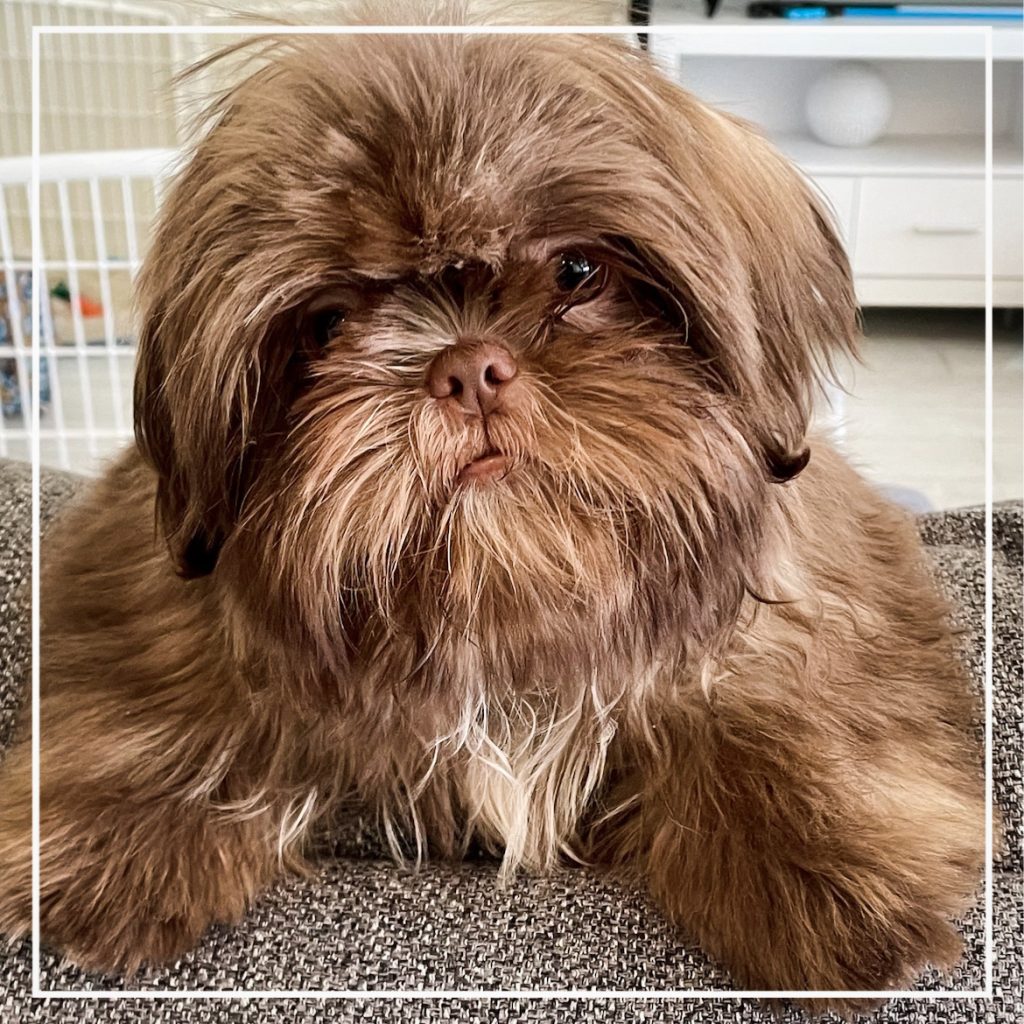
A purebred chocolate-liver Shih Tzu puppy sitting on the couch.
A liver Shih Tzu puppy that has gone through sound desensitization

Sound Desensitization Benefits

Early Sound Desensitization is another technique that I like to use with my Shih Tzu puppies. Early Sound Desensitization protocols help expose puppies to various sounds such as a blow dryer, a vacuum, sirens, etc. The goal is to dull any negative responses the puppy may have to the sounds. Sound therapy is very beneficial in helping produce better coping skills in puppies. When sound desensitization protocols are put in place during a puppy’s early socialization period the benefits can be tremendous.

Some puppies are more sensitive than others when it comes to sound sensitivity. The good news is that sound sensitivity is an adjustable trait in puppies. If a puppy is born extremely sensitive to sounds desensitization protocols can hopefully tone down the puppy’s negative response through repeat sound exposure.

Knowing a puppy’s sound sensitivity threshold is very important when it comes to puppy placement. A puppy that startles easily even after sound desensitization protocols, may do better in a home where the owners will be well aware of the puppy’s unique needs. For instance, a sound-sensitive puppy may do better in a quiet household rather than in the home of a musician. Or vice versa, a puppy that has a high sound sensitivity threshold may do excellent in a home with young children that have a lot of noisy toys.

In the end, it all circles back to how the puppy’s rearing. A puppy that takes part in a responsible breeding program that puts in place appropriate sound desensitization protocols is ultimately setting each puppy and family up for success. Both the puppy and the new family will hopefully be a great match and live in harmony.

Share This Post
Previous

What is Temperament Testing and Why is it Important?

Next

Common Health Issues in the Shih Tzu Breed

Filed Under: Behavior, Education, Socialization Tagged With: dog behavior, Puppy Curriculum

What is Temperament Testing and Why is it Important?

July 14, 2022 By Deanna

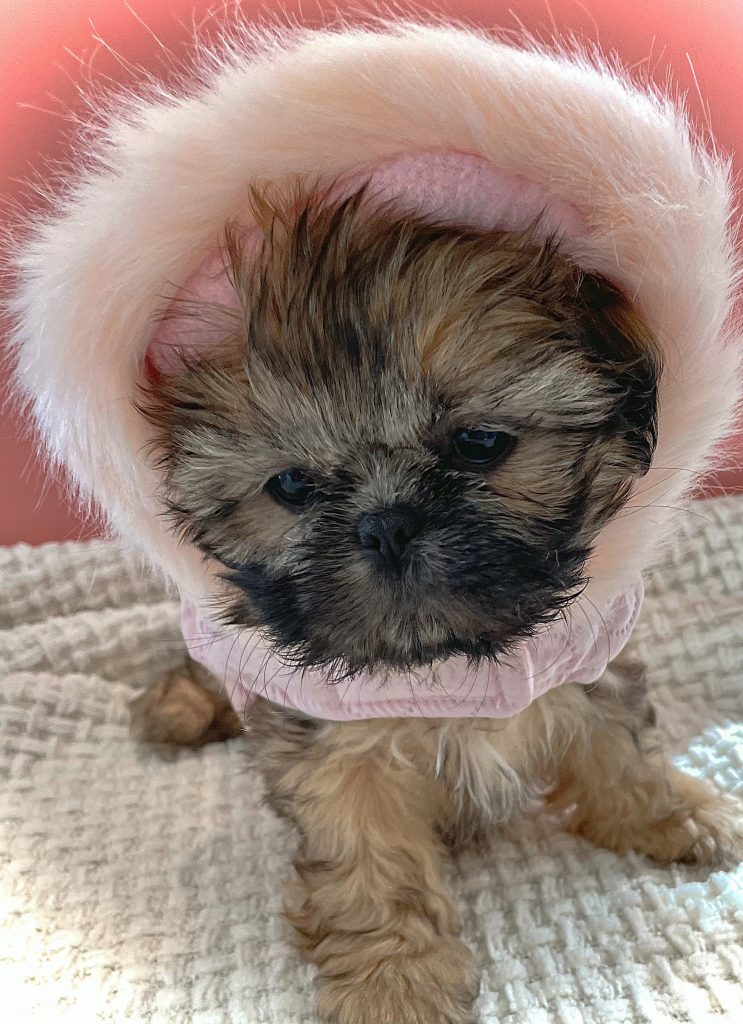
An available Shih Tzu puppy that has went through temperament Testing wearing a pink coat with a fuzzy hood.
A Temperament Tested Shih Tzu Puppy

Temperament Testing 101

Temperament testing is a form of assessment that many breeders use to evaluate a puppy’s behavior regarding certain personality traits. Puppies are introduced to a variety of stimuli in a controlled environment to see how they react. Typically, puppies go through evaluations somewhere between weeks 7-10, depending on the breed. Smaller breeds usually go through temperament testing closer to the 9 to 10-week mark.

Temperament traits include both stable traits and adjustable traits. The stable traits are typically hard to change. It is difficult for a breeder to change these traits in the puppies for the most part. The puppy evaluation simply identifies these stable traits so the breeder can match puppies with families that are willing to meet their unique needs through positive reinforcement and training.

On a side note, temperament is to a large extent an inheritable trait in dogs. It would be unethical for a breeder to intentionally breed an unstable dog in the first place. Adjustable traits are those traits that a breeder can change to some extent through proper socialization and a developmentally appropriate puppy curriculum. I temperament test all of the puppies in my responsible breeding program. I use the temperament test that Jeannette Forrey developed for breeders.

Stable Temperament Traits

Human assertiveness:

A dog’s assertiveness level is usually hereditary. A Shih Tzu may be human assertive, human non-assertive, or fall somewhere in the middle. Assertive dogs typically have bold personalities and often demand attention. Assertive dogs often appear bossy. An assertive dog has no problem stealing a french fry off your plate.

A non-assertive dog is often more submissive. Submissive dogs are typically less forward by nature. Non-assertive dogs are okay with not being the leader. Submissive dogs may even roll onto their backs as a form of submission. It is unlikely that a submissive dog is going to steal food off of your plate.

Motivation Level:

Motivation level is another stable trait that responsible breeders look for during temperament testing. When breeders talk about a puppy’s motivation level, they’re referring to a puppy’s willingness to do something for a human. A puppy’s workability level can be low, medium or high.

Shih Tzu puppies with a high motivation level are usually the ones that follow the tester around during puppy evaluations. Puppies with a high motivation level love working for humans. These little ones aim to please almost always.

Dogs with a medium motivation level are usually somewhere in the middle when it comes to workability. These middle-of-the-road puppies are perfectly happy to retrieve a Frisbee but also are content playing alone. Middle-of-the-road puppies do need reassurance on occasion.

Puppies with low motivation are often not interested in working through tasks. A puppy with low motivation may not bring the Frisbee back to you. Shih Tzu puppies with low motivation aren’t necessarily difficult puppies. The solution lies in finding out what makes them tick. Once you find out what they will work for things often run more smoothly.

Energy Level:

Energy level is another trait that is hard to change. Of course, a high-energy puppy will settle down with maturity, but not a whole lot. Stable traits are not easy to change for the most part. A Shih Tzu puppy with high energy often seems larger than life. High-energy puppies often have a hard time winding down. I often compare a high-energy puppy to an energizer bunny. These puppies keep going and going. These types of puppies do great in active families where they have an outlet for burning up energy.

Make sure not to confuse high energy with the puppy zoomies. Puppy Zoomies are short episodes of intense energy. Veterinarians call these surges Frenetic Random Activity Periods. These energy bursts often happen when a puppy or dog is excited. But, if your puppy is having zoomies too often it may be a sign that he needs more exercise.

Low-energy puppies, on the other hand, are perfectly content lounging around and taking a nap. These puppies are happy to go on a walk, but if you go too far they may need to take breaks. Low-energy puppies love a good stroller ride! Once again, most Shih Tzu puppies fall somewhere in the middle.

Prey Drive:

Prey drive refers to a dog’s desire to chase after things. For example, a dog with a high prey drive may pull at the leash or run off whenever he or she sees a bird. The pursuit of catching the bird runs strong in a dog with a high prey drive. Dogs with a high prey drive may also chase after a running child as well. Moving targets often brings out this inner trait in dogs with high prey drive.

A Shih Tzu with a low prey drive usually shows little desire to chase after movable objects. A low prey drive dog may simply look at the bird but is less likely to chase after it. Dogs with low prey drive usually make great pets for young children. As we all know, children love to run around. Most parents would prefer that their dog doesn’t chase after their child.

Human Focus:

Not all Shih Tzus need full human interaction. Some Shih Tzus would much prefer to play with a toy than follow their owner around everywhere. A dog with a high human focus usually loves nothing more than spending time with humans. We often call dogs with high human focus velcro dogs.

On the opposite side of the coin, we have dogs with low human focus. A dog with low human focus usually prefers toys or the other dogs in the house. You may be able to get a quick cuddle session here or there, but for the most part, these types of dogs prefer their personal space. Most dogs fall somewhere in the middle again when it comes to human focus.

Tenderheartedness:

When breeders test for tenderheartedness, they’re looking at the puppy’s ability to handle human emotions. Not all dogs can handle human emotions to the same degree. Some puppies don’t worry too much about human emotion. These puppies are the ones who may see a child crying and continue going about their business.

Some puppies almost fall apart when they witness extreme emotions. It is essential to know a puppy’s tenderheartedness score. A puppy that doesn’t have a high score may make a great pet for a young child or even excel as a therapy dog. A puppy that is extremely tenderhearted could fall apart in the wrong environment.

For example, I would never knowingly place a puppy that is extremely tenderhearted in a home where a family has a severe medical condition that causes a lot of intense human emotion. This is why I always ask my clients on the puppy application if they’re looking for a companion animal, emotional support animal, service dog, etc.

Adjustable Temperament Traits

Confidence Level:

Confidence is another trait that puppies may score low, medium, or high. When we talk about confidence, we are talking about the puppy’s comfort level around new people, places, or things. A Shih Tzu puppy with high confidence usually loves a good challenge and is eager to approach unfamiliar situations.

A puppy with low confidence may approach the same situation with a different outlook. To a puppy with low confidence, new people, places and things may create anxiety. Puppies with low confidence often need a lot of reassurance.

Nerve Strength:

Nerve strength refers to a puppy’s ability to cope with stressful situations. Shih Tzu puppies with high nerve strength are in a sense, bulletproof. Everything stressful seems to roll right off of the puppy with excellent nerve strength. Puppies with high nerve strength tend to take everything in stride.

A puppy with low nerve strength is often exactly the opposite. Low nerve strength puppies often become anxious when faced with situations they find stressful. They may need a great deal of encouragement to face new challenges. Furthermore, low-nerve-strength puppies often need time to recharge when they’ve been exposed to situations they find stressful.

If I have a puppy that is displaying low nerve strength before the go-home day, I always make sure to let clients know. Once again, just like tenderheartedness, I would never knowingly send a puppy with low nerve strength home with a family that has any type of medical condition that causes intense human emotion.

This is why it is so important that families let me know if they need an emotional support animal or a service dog. ESA and service dog puppies have specific temperament traits that make them ideal candidates for this type of work. Not every puppy has what it takes to handle this type of role. By placing the puppy with the right temperament in the right home, I am honoring not only the family but the puppy’s needs as well. If an applicant withholds this type of information, I cannot do my job correctly. As a result, the family and the dog may not be compatible.

Touch Tolerance:

Touch tolerance refers to a puppy’s comfort level when it comes to handling. A puppy with low touch tolerance doesn’t typically love the sense of touch. This type of puppy may not love grooming or be held for a long time.

A puppy with a high touch tolerance usually loves handling. This type of puppy often thrives off of touch. A puppy with a high touch tolerance is a great choice for a family with young children. Many puppies fall somewhere in the middle when it comes to touch tolerance levels.

Sound Sensitivity:

Many small breed dogs like Shih Tzus have sound sensitivity issues. It is good to know where puppies stand regarding their level of comfort with various noises. A Shih Tzu puppy with low sound sensitivity is unaffected by loud noises. Puppies with a high sound sensitivity score often display stress and fear around sudden loud sounds.

Sight Sensitivity:

Toy-breed dogs are also prone to sight sensitivity issues as well. Unpredictable movement may push a puppy with high sight sensitivity over the edge. Puppies with low sight sensitivity on the other hand love a good challenge. These puppies often crave and enjoy interacting with unpredictable movement.

Dog Friendliness:

I also test all of my puppies’ dog-friendliness levels. Dogs can be submissive, neutral, or assertive in this category. Submissive dogs typically take the back seat and let the other dog drive so to speak. If you already have an assertive dog at home a submissive dog is a great option and less likely to cause conflict. Neutral dogs are typically indifferent around other dogs. They may notice other dogs but typically leave them be for the most part. An assertive dog on the opposite side of the spectrum, is more likely to take on the alpha role. Assertive dogs have no problem getting into another dog’s personal space.

Not every puppy is born with the same temperament. Just like humans, puppies possess individual traits that make them unique. As a breeder, I like to know how my puppies score on both stable and adjustable traits. The stable traits are mostly set, but knowing where each puppy scores helps me place them in homes where they will succeed. For instance, if I have a puppy that scores high on energy level, I probably wouldn’t place that puppy in a home with a senior who suffers from mobility issues.

A breeder has more of the upper hand when it comes to adjustable traits. Adjustable traits can be tweaked to some extent. For example, a puppy that is highly sound sensitive and afraid of noises can come a long way if the breeder uses a developmentally appropriate sound desensitization program. To take it a step further, if the puppy who scores high on sound sensitivity is still sound sensitive after puppy evaluations the breeder can use this information to place this puppy in a home where his or her needs will be met.

The temperament testing results aren’t a tell-all. The results are simply a snapshot in time that helps the breeder get a more in-depth look at the puppy’s emerging personality. There is so much more that goes into the overall equation when it comes to a puppy’s adult temperament. Genetics, adequate socialization, life experiences, a nurturing home environment, and proper training play an important role in the puppy’s emerging personality.

In the end, puppy temperament testing is just another tool in a breeder’s toolbox that helps set both the puppies and the future owners up for success. I love giving my puppy families a general idea of what specific traits each puppy is displaying before they choose which puppy is best suited for their family dynamics.

I also love that temperament testing gives each puppy a voice. The puppies cannot speak for themselves, but they can give us a glimpse of who they are if we watch closely. Every puppy deserves to be heard. I have made a promise to my puppies that I will be their voice. I will do everything in my power to match the puppies with families that will give them the very best life has to offer!

Share This Post
Previous

Are Shih Tzu Puppies Good Pets for Children?

Next

The Benefits of Puppy Sound Desensitization

Filed Under: Education Tagged With: dog behavior, Puppy temperament testing

Are Shih Tzu Puppies Good Pets for Children?

July 12, 2022 By Deanna

A chocolate Shih Tzu puppy receiving a big hug from a little girl outdoors.
Shih Tzus often become best friends with kids

Are Shih Tzus good with kids?

Shih Tzus actually have a long history of being companion animals. Puppies can be an amazing addition to a family with children if children learn how to interact appropriately. On the opposite side of the coin, a Shih Tzu puppy must learn how to interact properly around children as well. It is a learning process that takes time, adequate training and patience.

Shih Tzu puppies are usually loving, affectionate, energetic creatures. Children possess similar traits which can be both positive and negative. On the one hand, your new Shih Tzu puppy and your child can run around and wear each other out. But, if the children and the Shih Tzu puppy aren’t taught the proper way to play, someone could get hurt.

Shih Tzus are a small breed. This puts Shih Tzu puppies at a very high risk of injury if rules and expectations aren’t in place. A Shih Tzu puppy from my responsible breeding program is only around 4 to 6 pounds at go home at 11 weeks.

It is important that all family members know how to properly interact with the new puppy. For example, if you’re not careful you may accidentally step on a puppy toe. It is important to be observant and slide your feet when walking near puppies. Some families even buy a bell to attach to their new puppy’s collar so they can hear the puppy coming. New owners can even take it a step further and hire a trainer to teach the children and the puppy how to properly interact. BringFido has a list of local trainers on their website: https://www.bringfido.com/.

If at all possible, I highly suggest that you purchase a Shih Tzu puppy for sale from a reputable breeder. A responsible Shih Tzu breeder doesn’t send puppies home before they’re developmentally ready. Often puppies are sent home before they’ve had the opportunity to complete socialization. Puppies learn lifelong skills from their mother and littermates during the critical socialization period.

Temperament testing is another tool that responsible breeders can use when placing puppies with young children. Temperament testing allows the Shih Tzu breeder to look at each puppies stable and adjustable traits. Shih Tzu puppies are sent to home environments that are in alignment with their unique temperament. For example, a puppy that displays extreme tenderheartedness and sound sensitivity might not do well in a home with young children. A puppy who scores low on tenderheartedness and is not sensitive to sounds would be a better match for a home with kids.

To sum things up, it is essential that both the puppy and the children feel safe and comfortable when they spend time together. If the children and the puppy learn to respect one another they are sure to become great friends. The bond between human and dog is nothing short of amazing.

Share This Post
Previous

What Exactly is a Liver Shih Tzu?

Next

What is Temperament Testing and Why is it Important?

Filed Under: Education Tagged With: new puppy

  • « Go to Previous Page
  • Page 1
  • Interim pages omitted …
  • Page 9
  • Page 10
  • Page 11
  • Page 12
  • Page 13
  • Interim pages omitted …
  • Page 15
  • Go to Next Page »

Footer

(480) 645-5553

Quick Links

  • FAQs
  • Shih Tzu Breed Information
  • Contract
  • Program & Pricing
  • Recommendations

Follow Us!

© 2026 • Arizona Sunrise Shih Tzus & Poos • All Rights Reserved • Website Design by Pixelvine Creative
  • Home
  • Program & Pricing
  • About
    ▼
    • My Journey
    • Dams
    • Sires
    • Transportation
    • Contract
  • Nursery
  • Reserve
  • Blog
  • FAQs
  • Contact
  • More
    ▼
    • Liver Shih Tzu Puppies
    • Shih Tzu Breed Information
    • Recommendations